Mini Skid Steer
How a Mini Skid Steer Kills Your Need for Extra Crew
You hired three guys last spring. You thought they would make you money. Instead, they show up late, take long breaks, and call in sick on Mondays. A mini skid steer does none of that. It shows up every day. It works through lunch. It never asks for a raise. Here is exactly why this machine eliminates your need for extra crew.
You have four jobs lined up. You split your crew into two trucks. Each truck carries two men. You pay $400 per day in wages before you earn a single dollar. Someone is late. Someone forgot a tool. You lose the first hour before a shovel hits the ground.
A mini skid steer changes your morning completely. One operator drives to the first job. The machine unloads from the trailer. Work starts immediately. No waiting for a second person to show up. No standing around watching coffee cool down.
It works at 7 AM sharp. Your crew works at 8 AM after coffee and small talk. That one hour difference, across 200 working days, adds up to 200 lost hours per year.
Pick up a shovel. Dig a hole 2 feet deep. Time yourself. A 12-inch hole takes 10 minutes by hand on average. Now watch a mini skid steer with an auger attachment. The same hole takes 45 seconds. It drills 13 holes in the time it takes one worker to dig a single hole.
Multiply that across a full workday. Your crew digs 20 holes by hand. A mini skid steer digs 150 holes. The machine outworks three men by a factor of seven. Every fence contractor, landscaper, and utility crew who makes the switch reports this same result on day one.
The math is simple: One machine with one operator replaces the output of a three-man hand crew. You pay one wage. You get three times the production. The machine does not slow down after hole number 50.
Load a wheelbarrow with gravel. Push it 100 feet. Dump it. Return for another load. You move roughly 3 wheelbarrows per hour. Each wheelbarrow holds 2 cubic feet. That is 6 cubic feet per hour per worker, at full effort, on a flat surface.
A mini skid steer with a standard bucket holds 8 cubic feet. The machine drives 100 feet in 15 seconds. Dump and return takes another 15 seconds. The mini skid steer moves 8 cubic feet every 30 seconds — 480 cubic feet per hour. That is 80 times the output of one worker pushing a wheelbarrow.
Three workers with wheelbarrows move 18 cubic feet per hour combined. One compact loader moves 480 cubic feet per hour. The machine wins by a factor of 26 — without a single complaint about the load weight.
Your crew takes 30 minutes for lunch. They take two 15-minute breaks. That is one hour of paid downtime per day per person. Over a 5-day week, you lose 5 hours of labor per worker. Three crew members cost you 15 hours of paid-for-nothing time every single week.
A mini skid steer does not take lunch. It does not take breaks. It does not stand around talking about last night’s game. You fuel it once in the morning. It runs from start to finish. The only thing that stops the machine is the key in the ignition.
Annual break cost: 15 lost hours per week × 50 weeks × $25 per hour = $18,750 per year in wages paid for zero output. This machine recovers that money from day one.
Your laborer calls in sick on Monday. Your second laborer calls in sick on Tuesday. Your crew of three becomes a crew of one. You cannot finish the job. You reschedule the customer. You lose that day’s revenue and risk losing the relationship entirely.
A mini skid steer does not get sick. It does not have family emergencies. It does not need a ride to work. The machine sits on your trailer every single morning, ready to move. Rain, Monday, the day after a holiday — the machine shows up without a text message excuse.
Every contractor who owns one reports the same thing: scheduling becomes simple the moment the machine replaces unreliable labor. You control the job. The job does not control you.
You spend two weeks training a new laborer. He learns to run a shovel, load a wheelbarrow, and grade with a rake. Then he quits for a job that pays one dollar more per hour. You start over with a new guy. You lose two weeks of productive time every time someone walks out.
A mini skid steer takes 20 minutes to learn. Move the left lever left. Move the right lever right. Push both forward to go straight. Pull both back to reverse. That is the entire training manual. The machine does not quit. It does not ask for more money. It does not compare itself to what the crew down the street is earning.
Operator retention rate: 100%. It has never walked off a job site. It has never called in with a toothache. It has never asked to leave early for a dentist appointment on a Friday afternoon.
This equipment replaces crew members across every major job type in the landscaping, fencing, tree service, and construction trades. Here is how it works on each one.
- Fence installation — one operator digs all holes
- Landscape grading — spreads soil and mulch solo
- Patio base prep — digs and loads without shovels
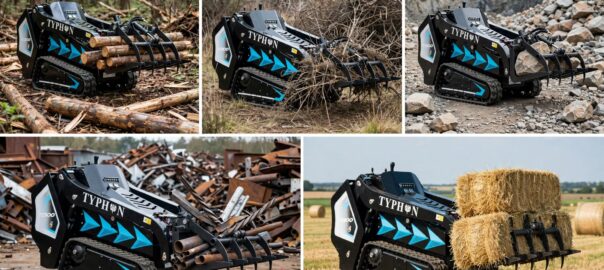
- Tree removal cleanup — grapple replaces hand lifting
- Snow removal — sweeper clears 5,000 sq ft per hour
- Utility trenching — cuts 100 ft trench before noon
On a fence job, one operator digs every hole with the machine. One helper sets posts. No third person needed. On a landscape grading job, one operator runs the machine while one person plants. It spreads soil, moves mulch, and hauls debris — three separate crew tasks handled by one machine and one operator.
| Cost Category | 3-Man Crew | Mini Skid Steer + 1 Operator |
|---|---|---|
| Daily Labor Cost | $600 | $240 |
| Weekly Cost | $3,000 | $1,200 |
| Annual Labor Cost | $150,000 | $48,000 |
| Annual Maintenance | $0 | ~$800 |
| Sick Days / No-Shows | Unpredictable | Zero |
| Annual Savings with Machine | — | $66,000+ |
A mini skid steer costs $25,000 to $40,000 new. One operator at $30 per hour costs $240 per day. Add fuel and you reach roughly $270 per day total. A three-man crew at $25 per hour costs $600 per day. The machine saves $330 every single working day.
Over 200 working days per year, that is $66,000 saved. The machine pays for itself in year one. Year two and beyond, that $66,000 stays in your pocket instead of going into wage payments for crew members who call in sick on Mondays.
- Pay three men to do one machine’s work
- Lose days to no-shows and sick calls
- Waste hours on training and re-training
- Want profit to scale without headcount
- Work only on large open sites with no gate access
- Move loads over 1,200 lbs consistently
- Have zero trailer or transport capacity
- Need multiple machines running simultaneously
A landscaper in Michigan paid $800 per day for a four-man crew and barely broke even. He bought a mini skid steer, reduced to one operator and one helper, and cut his daily labor cost to $400. His production stayed the same. His profit doubled.
A fence contractor in North Carolina ran two crews of three men each. Constant scheduling problems ate his margins. He added one to each crew and cut each crew to two men. Labor cost dropped by one-third. Production increased because the machine drilled holes faster than any hand crew he had ever run.
A tree service owner in Virginia paid three men to hand-load branches to a chipper. He bought a mini skid steer with a grapple. One operator loads ten branches at once. He reduced his crew by two. Fuel costs went up $10 per day. Labor costs went down $400 per day. That decision became obvious.
Maintenance reality check: A mini skid steer needs grease every 20 hours, oil changes every 250 hours, and track inspection every 1,000 hours. Total annual maintenance runs around $800. Compare that to $150,000 per year in crew wages. Read the full maintenance guide here so your machine earns its keep for years.
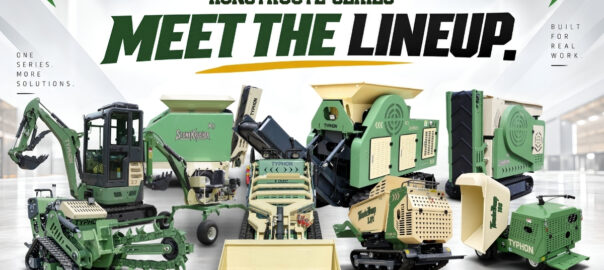
A mini skid steer works every day, runs all day, never calls in sick, and pays for itself in year one. It is not a toy — it is a crew replacement that saves $66,000 per year. Browse the full mini skid steer lineup at Machinery.blog and find the machine that ends your labor headaches for good.
Shop Machinery.blog →