5 Reasons Electric Forklift Total Cost of Ownership Beats Diesel
You see the price tag on an electric forklift. It looks higher than a diesel model. You hesitate. You think about your budget. You wonder if the electric forklift total cost of ownership makes sense.
Let us look at the actual expenses. When analyzing electric forklift total cost of ownership, they reduce your operating costs from day one. The lifetime cost comparison gives you the full picture.
Here are five reasons electric forklift total cost of ownership wins on total cost.
Diesel fuel expenses accumulate rapidly. A diesel forklift consumes fuel continuously during operation. Your fuel bill grows with every shift.
An electric forklift draws power from the grid. Electricity offers a lower cost per unit of usable energy. The efficiency gap is substantial, heavily favoring electric forklift total cost of ownership. Electric drive systems convert 85% of input energy to output work. Diesel powertrains convert only 30% to 35%. The remaining energy escapes as heat and noise.
This efficiency advantage means you spend less to accomplish the same work. Each operating hour costs less with an electric machine. This benefit multiplies across thousands of working hours.
A facility running two shifts sees the impact on their monthly utility statement. The electric fleet reduces that expense, immediately benefiting your electric forklift total cost of ownership. The savings appear directly on your operating reports.
Diesel powertrains contain numerous mechanical components. You schedule regular oil changes. You replace fuel and air filters. You maintain fuel injectors. You service emission control systems. You change drive belts and coolant hoses. Every service visit stops production. Every service visit adds to your expenses.
Electric drive systems contain fewer components. You never change engine oil. You never replace fuel filters. You never service injectors. You never maintain exhaust aftertreatment. Service intervals are longer.
Your annual service budget for an electric forklift runs lower. Diesel models require more frequent and more expensive maintenance. This difference creates a consistent yearly saving for your electric forklift total cost of ownership.
Fact: Electric motors have minimal moving parts. Fewer parts experience wear. Fewer parts fail unexpectedly. Reduced failures translate to reduced downtime.
Your diesel unit needs lubrication service every few months. Each service consumes time and parts. Your electric unit does not need oil changes. Your diesel unit needs fresh fuel filters at regular intervals. Your electric unit has no fuel system. Your diesel unit needs injector calibration periodically. Your electric unit has no injectors.
These individual savings accumulate. Across multiple years, you retain a significant sum that would otherwise go to maintenance.
Your diesel unit also needs attention to the exhaust system. The particulate trap requires periodic cleaning. Your electric unit has no exhaust components. No cleaning. No repairs. Industry data confirms electric forklifts need fewer service hours. Less service time means more machine availability, which directly lowers your electric forklift total cost of ownership.
A diesel forklift serves for a set number of years. An electric forklift delivers more years of productive service.
This longevity stems from the simpler electric architecture. Fewer components experience wear. Lower operating temperatures protect seals and fluids. No combustion process stresses the core structure.
Electric motors operate at lower temperatures compared to diesel engines. Heat degrades rubber seals. Heat breaks down lubricants. Heat distorts metal surfaces. Lower temperatures extend component life.
Electric motors also generate less vibration. Vibration loosens fasteners, fatigues mounts, and accelerates bearing wear. Reduced vibration means fewer repairs.
Distribute your initial investment across additional years of service. This is where electric forklift total cost of ownership shines. The electric unit costs less per year even with a higher purchase price.
Look at the total cost across the entire lifespan. The electric unit gives you bonus years of productive work. Those additional years generate revenue without requiring a new machine purchase.
Older electric forklifts relied on lead-acid batteries. These units needed replacement every few years. Replacement carried a significant cost. This represented a hidden expense of electric operation.
Current electric forklifts use lithium-ion battery packs. These packs deliver many charge cycles. In most applications, they outlast the forklift itself. You avoid battery replacement during the machine’s working life, which heavily improves electric forklift total cost of ownership.
Lithium-ion packs also recharge faster than lead-acid types. This enables opportunity charging during operator breaks. Your machine returns to work sooner. You gain additional productive time each shift.
Lead-acid batteries demand regular watering. You add distilled water weekly. One missed watering damages the plates. The battery fails prematurely. Lithium-ion packs require no watering. No attention. No water expense. No premature failure from neglect.
Lead-acid batteries need equalization charges. You run a special charge cycle monthly. This consumes hours. Your machine sits unused. Lithium-ion packs do not need equalization. No lost time. No extra power consumption.
Lead-acid batteries emit hydrogen gas during charge cycles. You need a separate charging area with ventilation. This adds construction cost. Lithium-ion packs emit no gas. You charge in any location. No ventilation requirement. No safety hazard.
Lead-acid batteries have significant weight. You need a dedicated battery handling device. This adds cost. Lithium-ion packs weigh less. You move them manually. No handling device. No added expense. The total benefit from moving from lead-acid to lithium-ion is substantial for your electric forklift total cost of ownership across the forklift’s service life.
Diesel forklifts encounter tighter emission rules. Meeting these standards requires expensive exhaust treatment. Older diesel units lose market value as rules become stricter.
Electric forklifts release zero emissions. They operate indoors without ventilation systems. They avoid penalties for air quality violations. They support a sustainable business image.
Multiple cities now limit diesel equipment inside buildings. Some jurisdictions restrict diesel in warehouses. Others mandate zero emission equipment near sensitive areas. Electric forklifts work everywhere without these limitations.
Diesel forklifts require periodic emission checks. Each inspection adds cost. A failed inspection means repair expense and lost time. Your machine stays off the floor. Electric forklifts need no emission checks. No cost. No downtime.
Resale prices for electric forklifts stay stronger. Buyers want clean units. They pay more for a machine ready for any site. Check used equipment prices in your area. A diesel unit brings a lower percentage of original cost. An electric unit brings a higher percentage. You receive more money at resale, finalizing the electric forklift total cost of ownership victory.
Consider a typical warehouse operating one forklift for standard hours across several years.
Diesel expenses include the initial purchase. They include fuel for every hour. They include scheduled maintenance. They include emission testing. They include reduced resale return.
Electric expenses include the initial purchase. They include power for every hour. They include reduced maintenance. They include no emission testing. They include improved resale return.
The electric option saves money across the full machine life. The saving is meaningful, making the electric forklift total cost of ownership the smartest choice. The payback on the higher initial cost happens within a short period.
Some buyers focus on the upfront difference. An electric forklift carries a higher price than a diesel unit. This difference exists. But recovery happens quickly. Your power savings cover much of the gap. Your maintenance savings add more. Your total savings close the remaining difference. You recover the extra initial cost soon. After recovery, every saved dollar stays with you.
Lost Production Time: Think about downtime expense. Your diesel unit stops for oil service, filters, injectors, emission tests, and exhaust cleaning. Every stop disrupts your workflow. Your electric unit runs longer between services and never stops for emission tests. Across a year, your electric unit delivers additional operating hours that produce revenue.
You need a charger for an electric forklift. This requires a charging station and a dedicated circuit. These are one-time expenses. You pay once and use them for many years. Conversely, your diesel unit needs fuel storage, a tank, a pump, spill containment, and regular fuel deliveries. Each delivery adds a surcharge. Across the machine’s life, the setup cost difference is small and barely impacts your electric forklift total cost of ownership.
Some operators question electric power, assuming electric lacks torque or struggles with heavy loads. These assumptions are wrong. Electric motors deliver full torque from zero speed. Diesel engines need to build RPM for torque. Electric forklifts accelerate better. They handle rated loads with ease. A forklift lifts the same weight whether electric or diesel. In many cases, electric lifts faster. It maneuvers more precisely. It operates with less noise.
Do not compare only the purchase tags. Compare electric forklift total cost of ownership. Ask your dealer for power and maintenance estimates. Check your local power rate. Calculate your daily run time.
Review your local rules. Does your area restrict diesel indoors? Will future rules affect you? Electric units are ready for new regulations. Diesel units face growing restrictions. Consider your team. Do you want them exposed to diesel exhaust? Do you want them working in loud conditions? Electric units create cleaner, quieter workspaces.
Electric forklift total cost of ownership wins in every comparison. The data is consistent. The savings are reliable. The decision is straightforward.
Make the change. Reduce your costs. Increase your uptime. Improve your workplace. Choose electric.
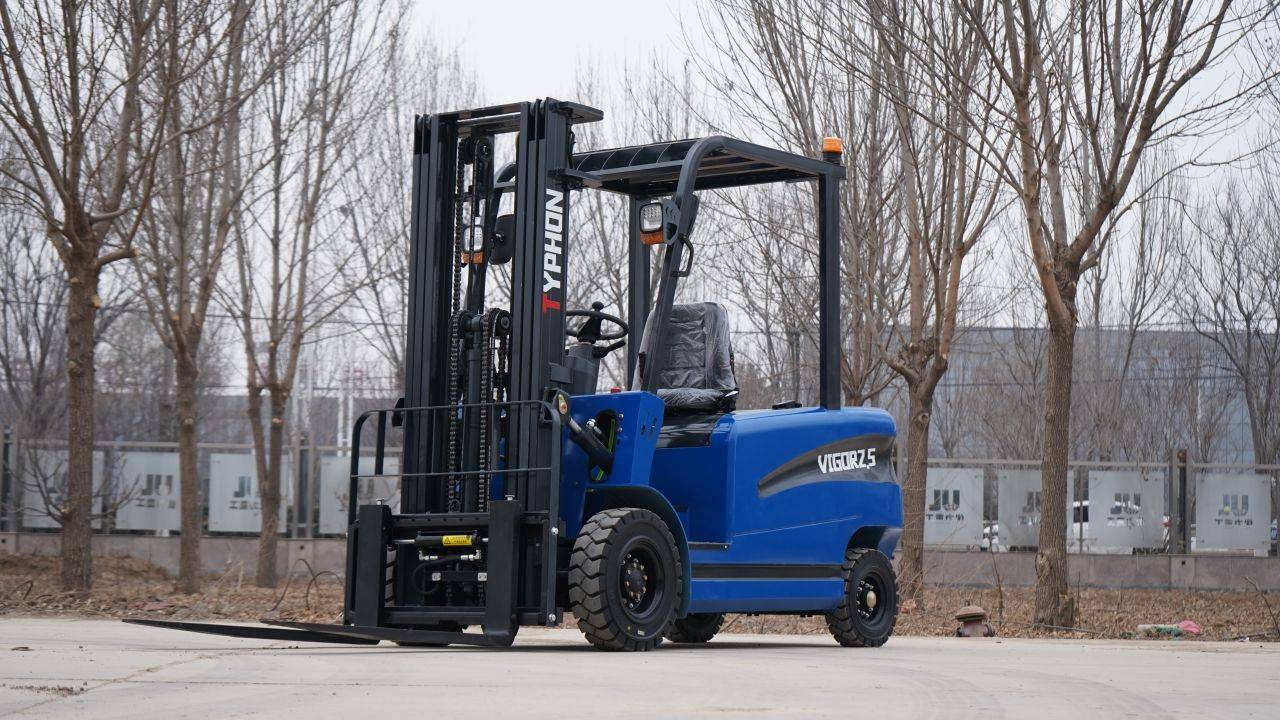
Ready to drastically lower your warehouse operating costs? Upgrade to zero-emission power with the New 2025 TYPHON Vigor 2.5 Electric Forklift. Built for heavy loads and maximum uptime.
View Pricing & Specs →