Commercial construction projects run on extremely tight schedules. Every delay costs money. Every hour wasted adds to the budget. Project managers need equipment that works fast and keeps crews moving, which is exactly why telehandler rental saves time on commercial builds.
Telehandlers have become undeniably essential on commercial builds. These machines combine the functions of a crane, forklift, and work platform in a single unit. They reduce setup times, accelerate material flows, and lower overall project costs. When you understand how telehandler rental saves time, you can plan much better.
Here are seven proven ways telehandler rental saves time on commercial construction projects, ensuring you stay ahead of deadlines and under budget.
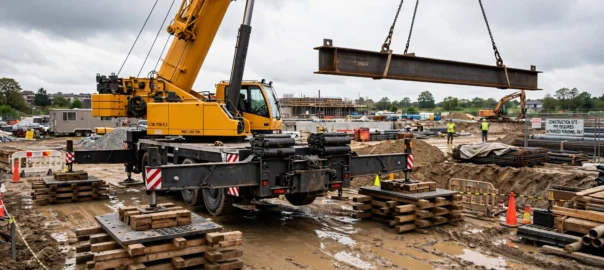
Cranes require significant setup time. A mobile crane needs 4 to 6 hours for assembly and positioning. Ballast must be transported, outriggers must be extended, and the crane must be perfectly leveled before any material moves.
Alternatively, telehandler rental saves time because the machine drives right off the delivery truck and goes to work. The operator climbs into the cab, the boom extends, and work begins. Hours of tedious setup time simply disappear from the schedule.
On short-term projects, telehandler rental saves time dramatically compared to cranes. A three-day job with a crane loses 4 to 6 hours on day one just to setup. A telehandler starts working within minutes, getting the project ahead of schedule from the start.
Some newer telehandlers eliminate even more setup time because they are designed without outriggers, resulting in faster setup times and improved maneuverability on the jobsite. Furthermore, crane rental requires additional personnel like signal persons. Telehandlers require only one operator, meaning labor costs drop and setup time is minimized.
Material handling consumes a massive portion of construction time. Workers move materials from delivery zones to work areas. Each transfer takes time, and each repositioning costs minutes.
By moving materials directly to the point of use, telehandler rental saves time seamlessly. The boom extends over obstacles, and the load is placed exactly where needed. Workers do not have to wait for materials to arrive by hand or by smaller, slower equipment.
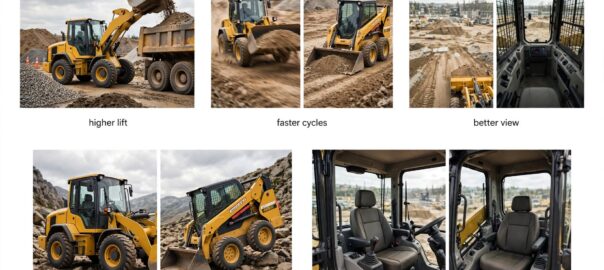
Some models are built specifically for mobility, transporting loads quickly across large jobsites to complete more lift cycles per shift. Pick-and-carry models prove that telehandler rental saves time by enabling continuous movement, completing more work over the course of a shift.
Roto telehandlers take this further with full 360-degree rotation. They lift and place loads at height from any location without moving the chassis. Material staging also becomes faster. Instead of moving materials multiple times, the telehandler picks directly from the delivery truck and places it on the work area, eliminating staging zones entirely.
Commercial builds increasingly happen in tight urban spaces. Job sites are constrained, streets are narrow, and space is heavily limited. Large equipment simply cannot maneuver effectively.
Compact telehandler rental saves time because these models navigate narrow streets easily. Some models weigh around 5,300 pounds and measure only 4 feet 6 inches wide. They fit through standard gates, work in city parks, and maneuver perfectly where larger machines cannot go.
Tight access no longer creates delays, which is exactly why telehandler rental saves time in dense neighborhoods. These machines are light enough to tow behind a half-ton pickup, eliminating delivery delays completely.
Their small footprint requires far less space for operation, eliminating the wasted time spent moving other equipment in and out of a constrained urban site.
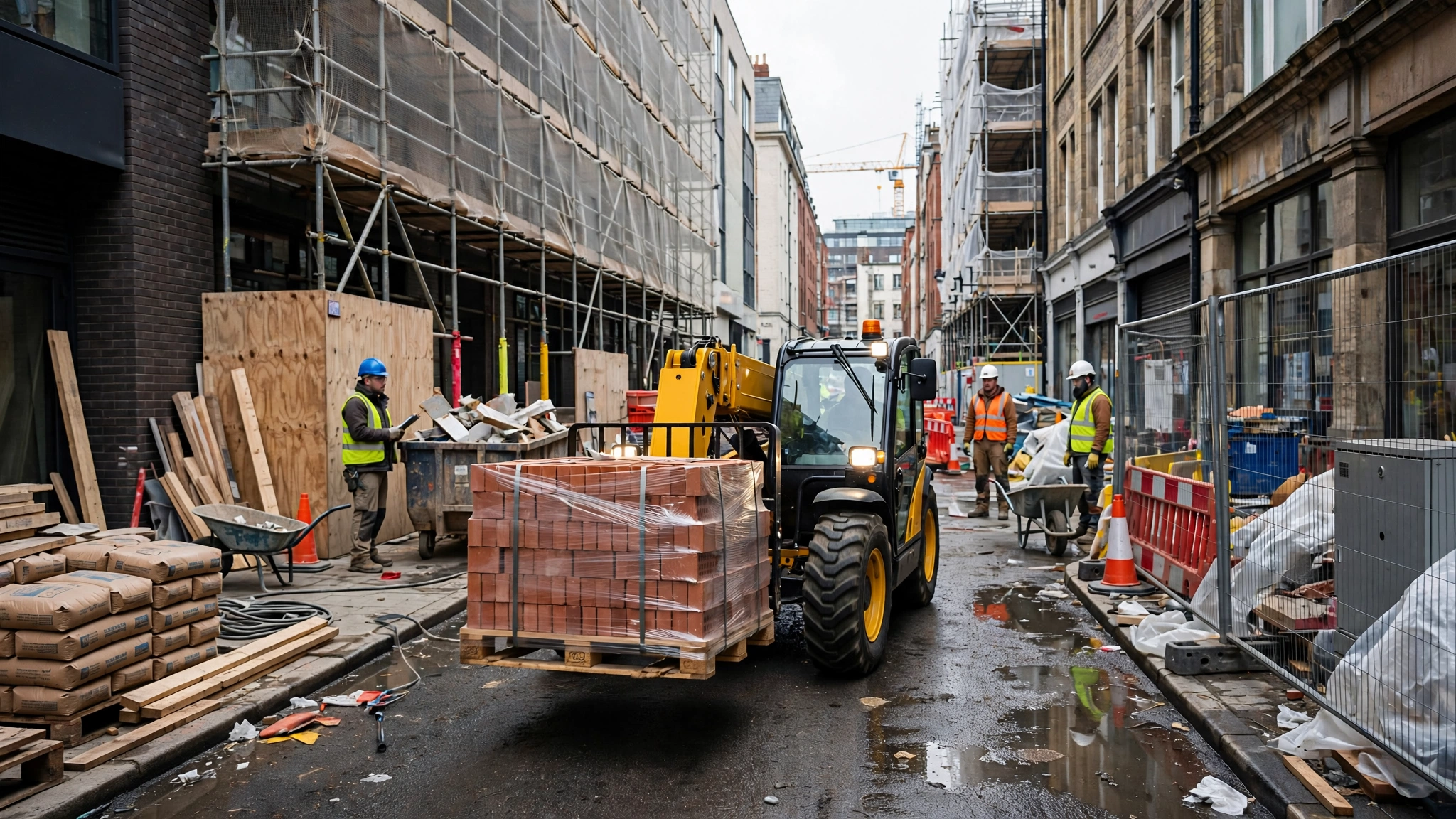
Framing is one of the most time-sensitive phases of commercial construction. Multiple trades work simultaneously, and materials must be lifted to upper floors extremely quickly. Delays here push back every subsequent trade.
During these critical phases, telehandler rental saves time by taking on heavy lumber lifts precisely when needed. On a commercial framing project with a tight two-week deadline, the telehandler carried heavy lumber and ensured the project was completed on time without delays.
The ability to lift materials to multiple floors without repositioning the machine proves how telehandler rental saves time. The boom reaches different levels from a single stationary location, keeping structural work moving fast.
New models extend these capabilities even further. Some offer a 12,000-pound lift capacity and a 56-foot lift height, moving quickly across large sites with a 15.5 mph travel speed. More trips per day translate directly to massive productivity gains.
Commercial sites often require multiple types of equipment. A forklift moves materials at ground level, a crane lifts to height, and a work platform provides worker access. Each machine change costs serious time.
By replacing skid steers, forklifts, and rough-terrain lifts with a single unit, telehandler rental saves time instantly. It lifts, places, carries, and reaches without waiting for the next machine to arrive.
Roto telehandlers take this further by replacing a crane, a forklift, and a work platform entirely. Because one operator runs one versatile machine, telehandler rental saves time and dramatically reduces site congestion. Less equipment means smoother site organization and drastically improved safety.
Telehandlers accept a wide range of attachments. Buckets, baskets, extensions, and jibs change in minutes. The machine adapts to different tasks without ever leaving the jobsite.
This immense versatility shows exactly how telehandler rental saves time. An operator can move pallets with forks, swap to a bucket for loose material, and then swap to a basket for workers—all in minutes. The work continues uninterrupted.
Attachment changes are infinitely faster than bringing in a completely different machine. A work platform attachment turns the unit into an elevated access solution, proving again that telehandler rental saves time by eliminating hours spent erecting and dismantling scaffolding.
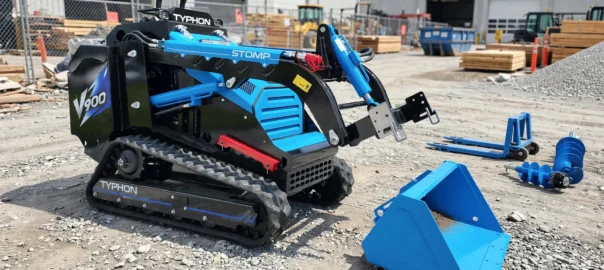
Additionally, the universal attachment system on compact telehandlers lets operators use existing standard skid steer attachments. No new equipment is needed, and no time is wasted learning new systems.
Idle equipment is wasted time and money. Machines sitting on rent but barely used drastically drive up project costs. Rental programs now help contractors identify underutilized equipment.
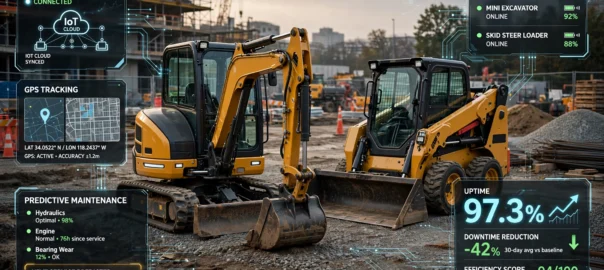
Better utilization means better fleet planning, which is a key reason telehandler rental saves time. GPS tracking identifies available units on other jobsites so a unit can be reassigned the same day. No new rental is needed, and no delay occurs.
Utilization data provides clear insights. Machines running only a few hours per week can be off-rented. Contractors know exactly what equipment is doing, shifting rental decisions from reactive to highly proactive.
Telehandler rental saves time across every single phase of your commercial build. By centralizing lifting, reaching, and carrying into one highly mobile machine, you drastically cut down on delays.
- Zero crane setup or outrigger delays
- Faster material delivery to exact points
- Rapid attachment swaps (Forks to Bucket)
- Single machine replaces multiple units
- Lowered labor costs (fewer operators needed)
- Eliminated scaffolding setup times
- Reduced transportation and delivery fees
- Higher daily utilization rates
From eliminating complex crane setups to accelerating multi-story framing, telehandler rental saves time and significantly boosts your profit margins. Reevaluate your next commercial project’s equipment list and experience the efficiency firsthand.
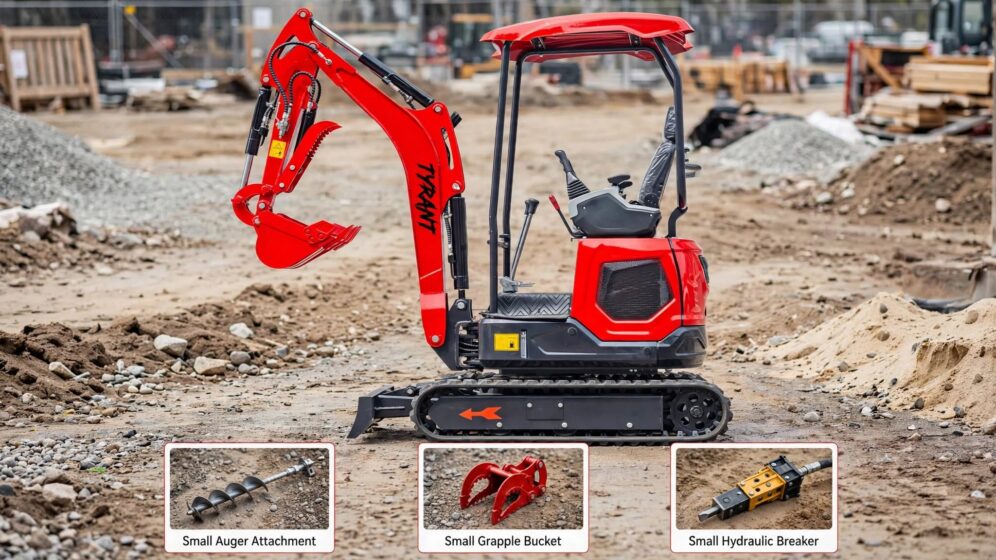
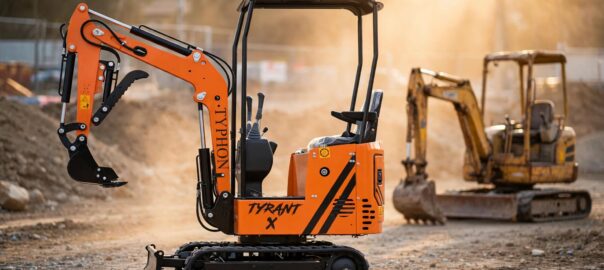
Looking for compact, versatile machinery for your next commercial build? Explore the TYPHON Kuvuo 4.0 Four-Ton Cabin Mini Excavator for high-powered, tight-access excavation performance.
View Equipment Specs →
One thought on “7 Proven Ways Telehandler Rental Saves Time on Commercial Builds”