7 Critical Skid Steer Mistakes That Destroy Your Undercarriage
You buy a skid steer. You work it hard. You expect it to last. But operators make critical skid steer mistakes every single day. These skid steer mistakes cost you money. They cost you massive downtime. They cost you entirely preventable repairs.
Here are seven critical skid steer mistakes that destroy your undercarriage. Avoid them. Save your machine. Save your budget. Save your business.
You check your track tension once a year. You think it is fine. You are wrong. Ignoring tension is one of the most common skid steer mistakes.
Track tension changes with use. The tracks stretch. The tension loosens. Loose tracks slip, wear faster, and jump off the sprocket. You easily lose an hour just putting the track back on.
Tight tracks also cause problems, resulting in equally costly skid steer mistakes. If you over-tighten the track, the bearings stress, the rollers wear out rapidly, and the track itself stretches and breaks early.
Fix it: Check your track tension weekly. Use the manufacturer’s guide. Measure the sag and adjust as needed. This takes exactly 5 minutes but saves you thousands in parts.
A track that is too loose slaps against the undercarriage, causing vibration that loosens bolts and fails fittings. A track that is too tight creates excessive friction, heating up bearings, breaking down grease, and destroying components. Do not guess the tension—use a gauge. Guessing is one of those skid steer mistakes you cannot afford.
You work on concrete. You aggressively turn the machine. The tracks skid across the surface, and you hear the rubber grind. You ignore the sound. This ranks high among destructive skid steer mistakes.
Skidding on hard surfaces destroys tracks. The rubber wears down, lugs flatten, and the track loses traction. You replace tracks twice as often because of these skid steer mistakes. Turn slowly. Reduce your speed and make gradual turns instead of sharp ones.
Track replacement costs $2,500 to $5,000 per set. One warehouse operator turned sharply on concrete daily. His tracks lasted just 400 hours. He switched to wheeled tires, avoiding these skid steer mistakes, and his tires lasted 2,000 hours, saving $8,000 a year.
Skidding also damages the undercarriage frame. The repeated sideways motion stresses mounting points. Bolts stretch and cracks form. Frame repairs from these skid steer mistakes easily cost $1,000 to $3,000.
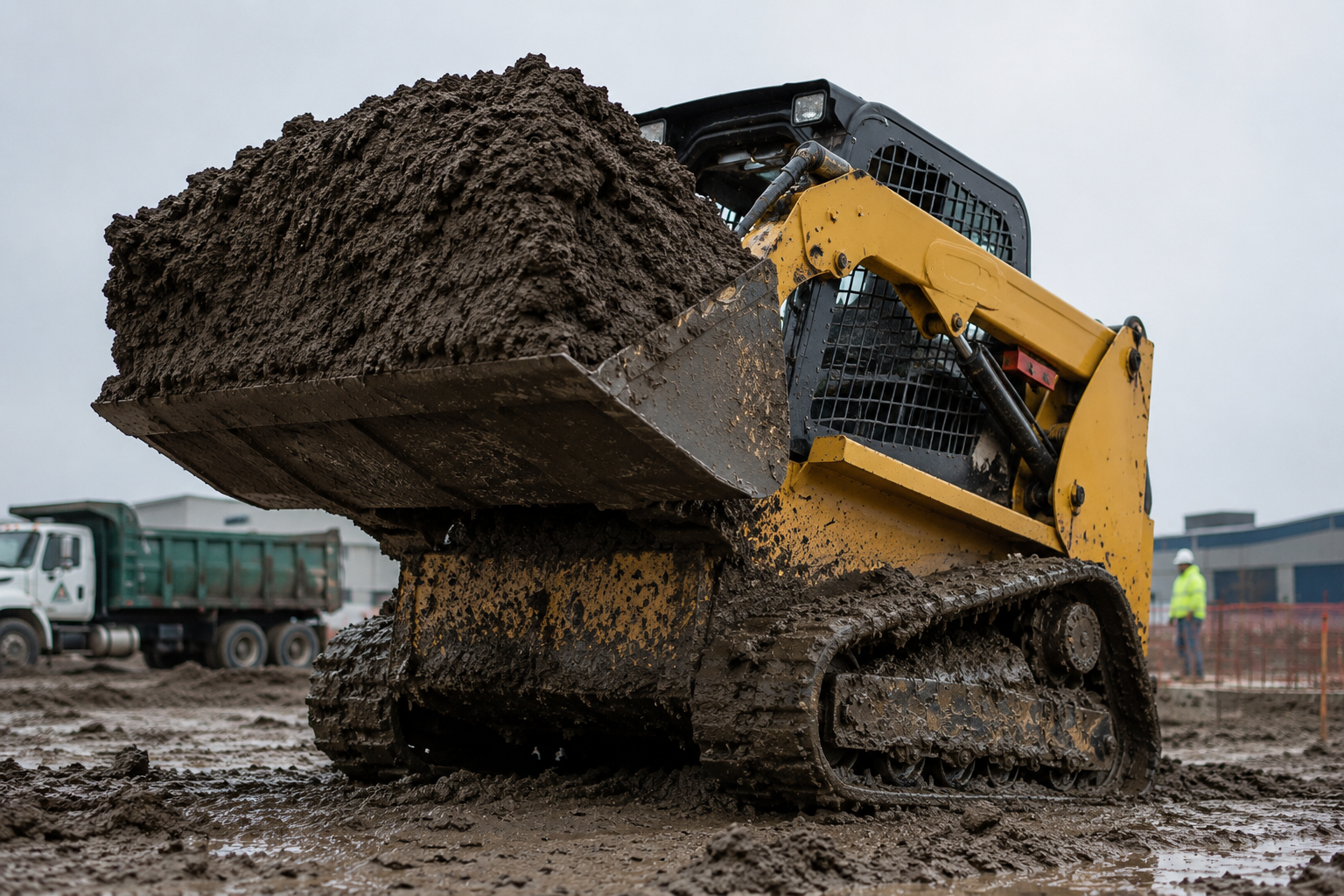
You need to move more material quickly, so you overload the bucket. The machine lifts the load, so you think you are fine. You are not. Overloading is one of the most structural skid steer mistakes.
Overloading puts immense stress on the undercarriage. Bearings take extra weight, tracks stretch, and the frame twists. Components fail far too early. Know your machine’s rated operating capacity. Do not exceed it. Making these skid steer mistakes saves time today but costs heavy downtime tomorrow.
Exceeding the rated capacity by just 10% reduces track life by 30%. The extra weight presses the tracks harder into the ground. Lugs wear rapidly. Undercarriage components crack under pressure. Furthermore, overloading bends lift arms, wears out pins, and causes cylinders to leak.
You clear a demolition site. Rocks and debris are everywhere. You drive right over them without cleaning the site first. Rushing site prep leads to brutal skid steer mistakes.
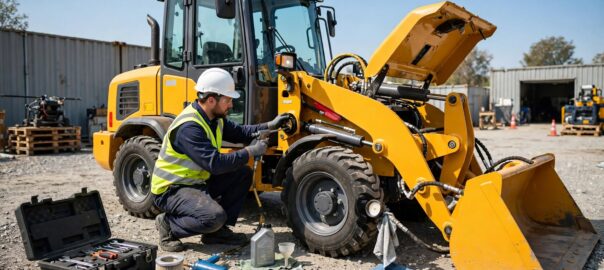
Rocks wedge tightly between the track and the sprocket. They puncture the track and shatter roller wheels. Clean your work area before you start. Remove large rocks, metal debris, and broken concrete. Inspect your undercarriage after each shift and remove any trapped debris.
The Damage: A rock stuck in the track creates a flat spot. The flat spot creates a severe thump every rotation, stressing the entire undercarriage until the track fails. A piece of rebar punctures the track, requiring a patch that never holds up as long as original rubber. Concrete chunks ruin sprocket teeth, causing the track to skip.
You rarely grease your machine. You think it is not that important. You are wrong. This is one of the most easily avoidable skid steer mistakes.
Your skid steer has vital grease points. Bearings, rollers, and pivot points need constant lubrication. Dry bearings fail incredibly fast. A failed bearing costs $200. A failed bearing that subsequently damages the sprocket costs $500. A failed bearing that ruins the track costs $2,000.
Avoiding these skid steer mistakes takes 10 minutes. Grease your machine every 10 hours using quality grease. Clean the fittings before greasing. Pump until clean grease emerges to push out dirt-contaminated grease that acts like sandpaper on bearing surfaces.
Your left track wears faster than your right track. You ignore it. You think it is normal. It is not. Ignoring uneven wear is a clear indicator of systemic skid steer mistakes.
Uneven wear indicates alignment issues, failing bearings, or a twisted frame. Measure track wear regularly. If you see uneven wear, find the root cause and fix it immediately.
Ignoring these skid steer mistakes means the machine pulls to one side, the operator works harder, and the machine eventually breaks down. You end up replacing one track while the other has life, paying for two separate replacements and service calls. Wear on the outside edge indicates excessive turning; wear on the inside indicates severe misalignment.
You work in dusty conditions. The radiator clogs, the engine overheats, but you keep working. Engine overheating leads to undercarriage skid steer mistakes you never considered.
Extreme heat radiates down and damages the undercarriage. Rubber tracks degrade faster, bearings lose their grease, and seals crack. Clean your radiator daily. Blow out dust, wash the fins, and keep the engine cool.
Use compressed air to carefully blow the fins backward, pushing debris out. Also clean the oil cooler. A cool machine prevents compounding skid steer mistakes and expensive part failures.
Parts wear naturally, but these skid steer mistakes accelerate that wear drastically. You replace parts twice as often and spend $5,000 extra per year easily.
| Component | Replacement Cost |
|---|---|
| Set of Tracks | $2,500 to $5,000 |
| Set of Tires | $1,000 to $2,000 |
| Roller Assembly | $200 to $500 |
| Sprocket | $300 to $700 |
| Lost Day of Work | $800 to $1,200 |
Four failures per year cost you $4,000 in lost revenue. Total annual cost of these skid steer mistakes can exceed $9,000. Total time to prevent them? 26 hours per year. That equals $346 saved for every hour of maintenance you perform.
Your operators cause most of these skid steer mistakes simply because they do not know better. They think the machine is tough, so they push it too hard. Train them. Show them the wear points and the cost of parts.
- Check track tension and measure sag
- Grease all pivot points and bearings
- Clean the radiator and oil cooler
- Inspect undercarriage for jammed rocks
- Measure tracks for uneven wear
- Skidding and sharp turns on concrete
- Overloading past the machine’s limit
- Driving blindly into demolition debris
- Skipping daily grease schedules
- Ignoring engine and hydraulic overheating
An operator who cares avoids skid steer mistakes. Create a pre-shift checklist. Reward good operators when the machine hits 1,000 hours with zero undercarriage repairs. Print this list, put it in the cab, and save your investment.
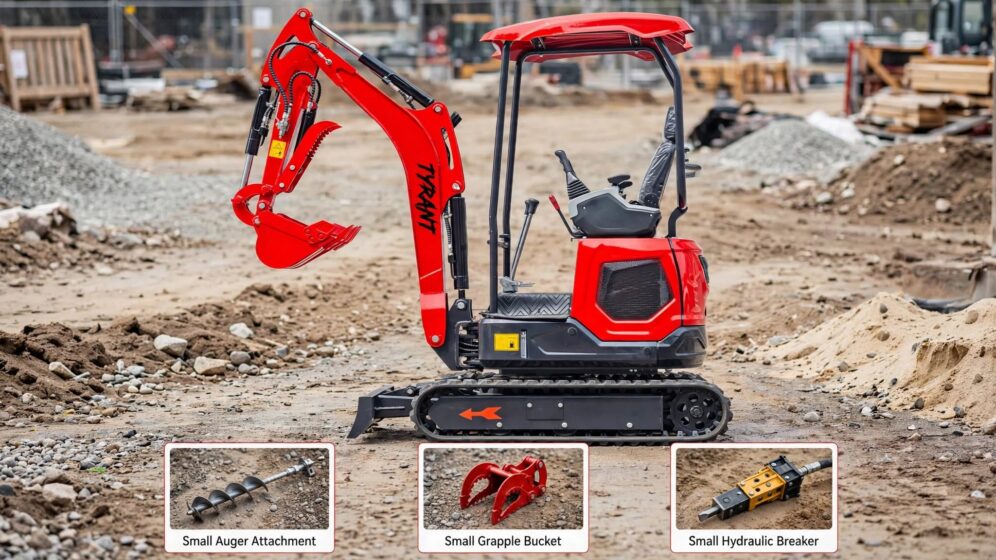
Ready to add a reliable machine to your well-maintained fleet? Look at the New TYPHON Terror XVII Pro 3800-lb Mini Excavator. Featuring premium hydraulics and a Kubota diesel engine.
View Equipment Specs →