Wheeled vs Tracked Machines: The Full Comparison Every Buyer Needs in 2026
You walk into an equipment dealer. You see two machines that look almost identical. One has wheels. One has tracks. The price difference is $15,000. Which one do you buy? The wheeled vs tracked machines debate affects your daily work, your operating costs, and the jobs you can accept. Here is the full breakdown of wheeled vs tracked machines so you buy the right one first time.
Wheels concentrate machine weight into four small patches. Each patch presses down with high force. On soft ground, wheels sink. On wet clay, wheels spin. On loose soil, wheels dig ruts.
Tracks spread machine weight across a large area. A track loader exerts 4 to 6 pounds per square inch. A skid steer exerts 15 to 25 pounds per square inch. The track machine floats. The wheel machine sinks. Ground pressure is the first reason wheeled vs tracked machines perform so differently on soft ground.
By the numbers: A 7,000-pound skid steer on wheels puts 1,750 pounds on each tire patch. A 7,000-pound track loader puts 350 pounds per square foot of track contact. The track machine applies one fifth the ground pressure.
Wheels rely on tread design and rubber compound. On hard surfaces, wheels grip well. On wet grass, wheels slip. On ice, wheels spin. On wet clay, wheels stop moving.
Tracks have more surface contact. More contact means more grip. A track loader climbs slopes that a skid steer cannot start. A track loader works in mud that buries a skid steer up to the frame. In the wheeled vs tracked machines comparison, traction on wet ground is where the gap is widest.
Site test — Oregon, winter conditions: The wheeled machine spent 12 hours stuck or recovering from spins across 100 hours of work. The tracked machine spent only 2 hours stuck.
Wheels move fast. A skid steer travels 7 to 12 miles per hour. On a paved lot, you move quickly between piles. On a large site, you cover ground fast.
Tracks move slowly. A track loader travels 5 to 8 miles per hour. The rubber tracks generate heat at high speeds. Running tracks at top speed wears them out faster. When speed is the job requirement, wheeled vs tracked machines is not a close contest — wheels win every time.
Real numbers: A contractor moving material across a 10-acre site found the skid steer made 20 trips per hour. The track loader made 14 trips per hour. The wheeled machine moved 30 percent more material per hour on hard ground.
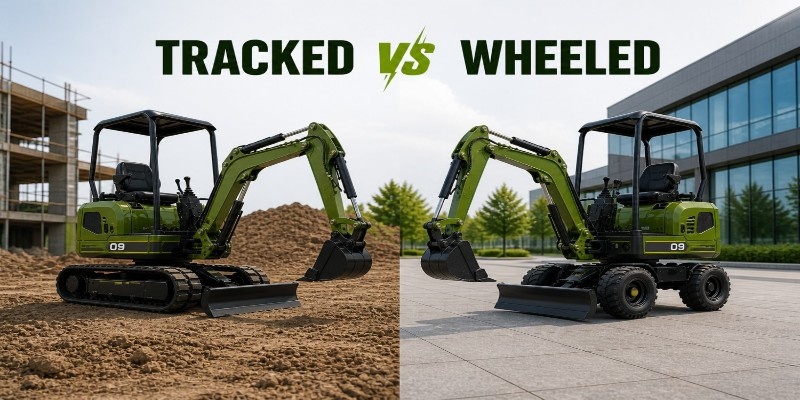
Wheels turn tight. A skid steer spins in its own length. You pivot around a bucket. You work in corners. You maneuver between obstacles without backing up.
Tracks turn wider. A track loader needs more space. The tracks resist sliding sideways. You make three-point turns in tight spaces. You back up more often. You lose time on confined jobs. For residential and gated sites, wheeled vs tracked machines comes down to this turning difference more than anything else.
Landscaper test — fenced backyards: The skid steer finished the yard in 45 minutes. The track loader took 70 minutes making repeated forward-and-back turns around a single tree.
Wheels bounce. You feel every rock and rut. Your spine absorbs the impact. An 8-hour day on a wheeled machine leaves you sore. The bucket bounces on uneven ground and you lose material over the top.
Tracks smooth the ride. The rubber and the track suspension absorb bumps. The bucket stays steady. You keep more material in the bucket. Your body lasts longer through a long day. Operator fatigue is one of the most overlooked factors in the wheeled vs tracked machines decision.
Grading contractor test: The wheeled machine spilled 15 percent of its load on a rough site. The tracked machine spilled 3 percent. A 10-hour day on tracks felt like a 5-hour day on wheels to the operator.
Wheels cost less. A new mid-range skid steer runs $40,000 to $55,000. A used machine with 1,500 hours runs $25,000 to $35,000.
Tracks cost more. A new compact track loader runs $55,000 to $75,000. A used machine runs $35,000 to $50,000. Track condition heavily affects used pricing. New tracks add $2,000 to the price. Budget is often what settles the wheeled vs tracked machines question for smaller operations.
| Machine Type | New Price | Used Price |
|---|---|---|
| Skid Steer (Wheels) | $40,000 – $55,000 | $25,000 – $35,000 |
| Track Loader (Tracks) | $55,000 – $75,000 | $35,000 – $50,000 |
On a 5-year loan at 7 percent interest, the $15,000 to $20,000 price gap adds $300 to $400 per month to your payment. Check your cash flow before deciding.
Wheels cost little to maintain. Tires last 1,500 to 2,500 hours. A new tire costs $200 to $400. No moving parts. No tension to adjust.
Tracks cost more. Rubber tracks last 800 to 1,500 hours depending on surface. Hard concrete cuts track life in half. Rocky ground tears track lugs. A new track set costs $1,200 to $2,000. A full undercarriage replacement costs $5,000 to $8,000. Over a 5-year period, maintenance alone can add $10,000 to the true cost of wheeled vs tracked machines.
| Cost Item | Wheels | Tracks |
|---|---|---|
| Tire / Track Life | 1,500 – 2,500 hrs | 800 – 1,500 hrs |
| Replacement Cost | $200 – $400 each | $1,200 – $2,000 set |
| Undercarriage | None | $5,000 – $8,000 |
| Fleet cost (2,000 hrs) | $800 | $3,400 |
Wheels tear up soft ground. A skid steer on wet lawn leaves ruts. A skid steer on fresh asphalt leaves scuff marks. A skid steer on finished grading leaves tire tracks that require rework.
Tracks protect sensitive surfaces. A track loader on finished lawn leaves light impressions. A track loader on asphalt leaves no damage. A track loader on wet soil compacts less than a walking person. Surface protection is the final category where wheeled vs tracked machines gives tracks a clear edge.
Sod installer test: The wheeled machine tore 8 percent of new sod. The tracked machine tore 1 percent. The tracked machine reduced repair cost by $400 per job.
Answer these five questions. Count your answers. The side with more answers is your machine. This framework cuts through the wheeled vs tracked machines noise and gives you a clear direction based on your actual work.
- Snow removal on paved lots and streets
- Needed speed between sites
- Hard surfaces only, all season
- 3,000 hours with zero undercarriage cost
- Land clearing on fresh forest ground
- Drives over stumps and wet soil daily
- Needs traction more than speed
- Works days when skid steers stay parked
The wrong machine costs you money. Buy a track loader for hard surface work and you pay $15,000 extra, replace tracks every 1,000 hours, and move slow. Buy a skid steer for wet soft ground and you spend hours stuck and lose jobs. Match the machine to your ground. Read our compact excavator guide to see how the same logic applies to digging machines.
Still deciding between wheeled vs tracked machines? Browse the full equipment lineup on Machinery.blog and find the right machine for your ground conditions and budget.
Shop Machinery.blog →

One thought on “Wheeled vs Tracked Machines: Which One Is Better for Your Job?”