Why Compact Construction Machines Are Changing Small Job Sites
Small job sites have tight spaces. Narrow driveways. Small backyards. Alleys with low clearance. Basements with low ceilings. Ten years ago, you dug those sites by hand. Today, compact construction machines finish in hours what used to take days. Here is exactly how they changed the game.
A full-size excavator needs 12 feet of width and 25 feet of turning radius. It needs a lowboy trailer and a semi truck to move it. Most small job sites do not accommodate any of that. The side gate measures 36 inches. The backyard access path measures 48 inches. The basement door measures 32 inches.
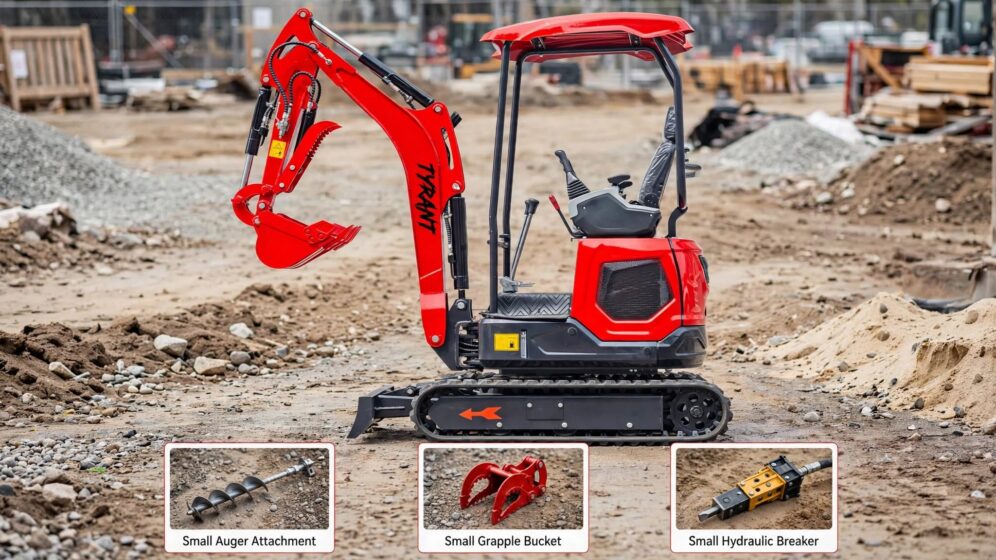
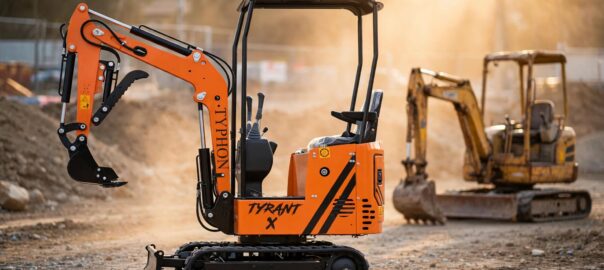
Compact construction machines fit through every one of those openings. A mini excavator under 1 ton fits through a standard garden gate. A stand-on skid steer fits through a 48-inch opening. A walk-behind trencher fits through a 36-inch gate. The job gets done because the machine gets in — not because your crew digs by hand for three days.
The access problem is not a minor inconvenience. It is the single reason thousands of small contractors still use wheelbarrows and sledgehammers on jobs that compact construction machines could finish before lunch.
You tow compact construction machines with your work truck. A Ford F-150 pulls a 7,000-pound mini excavator. You do not need a CDL. You do not need a semi driver. You do not need a second vehicle or a second person on payroll to move the equipment.
You arrive alone. You unload in 10 minutes. You drive through the side gate. You start working. A fence contractor in Texas documented his access times: with a full-size skid steer, he spent 45 minutes getting into a backyard. With a compact stand-on machine, he spent 8 minutes. He saved 37 minutes per job. Over 200 jobs per year, that is 123 hours saved — more than three full work weeks.
Real access comparison: 45 minutes to access a job site with full-size equipment vs 8 minutes with compact construction machines. Multiply 37 minutes saved across 200 annual jobs and you recover 123 hours — time you bill to other customers instead.
Compact construction machines cost significantly less than full-size equivalents. A full-size skid steer runs $60,000 to $90,000. A compact skid steer runs $25,000 to $40,000. A full-size excavator runs $80,000 to $150,000. A mini excavator runs $25,000 to $70,000. Lower purchase price means lower monthly payments, lower insurance, and lower fuel cost per hour.
A landscaping business owner purchased a compact track loader for $45,000. His monthly payment sits at $850. He bills the machine at $85 per hour. He needs 10 hours of machine time per month to cover the payment. He bills 80 hours per month. The equipment pays for itself and generates profit every single month.
Break-even math: At $85 per hour billing rate, 10 billed hours per month covers a $45,000 compact machine payment. At 80 billed hours per month, the machine generates $5,950 in monthly revenue above its own cost. Full-size equipment at $90,000 requires twice the billed hours to break even.
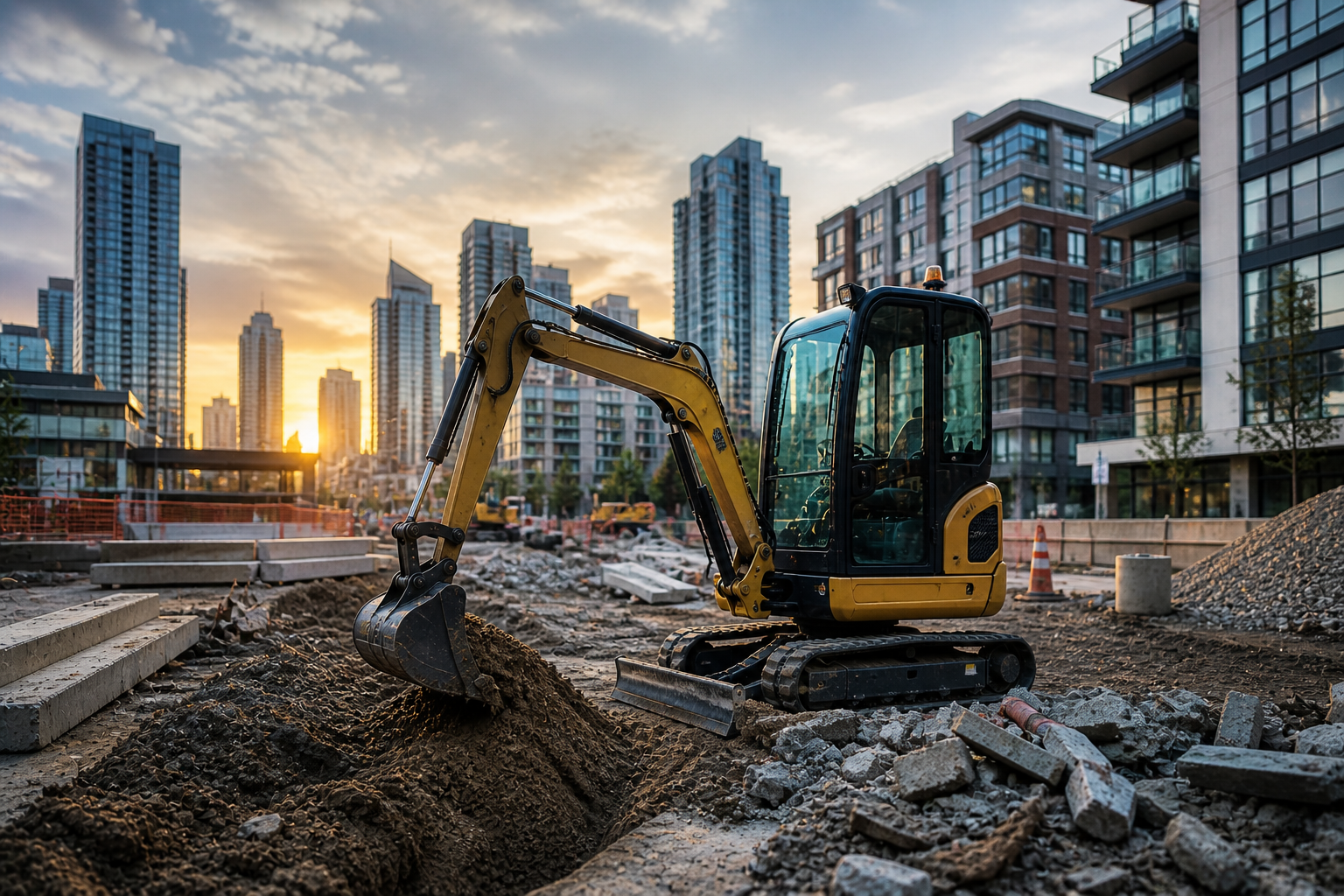
Compact Construction Machines
Full-size machines intimidate new operators. The controls feel heavy. The machine moves fast. The margin for error is small and expensive. Compact construction machines respond differently — controls are gentler, movement is slower, and a new operator learns on soft ground without fear of major damage.
A construction company owner now trains all new hires on compact equipment first. He gives them a 1-ton mini excavator for two weeks. They learn control patterns, digging angles, and grade reading in a low-stakes environment. Then he moves them to a 5-ton machine. His training time dropped from 6 weeks to 3 weeks — a full month of productive time recovered per new hire.
Three weeks of recovered training time per new hire, at $25 per hour for 40 hours per week, equals $3,000 in productive labor recovered before the operator even touches a full-size machine.
Compact construction machines use the same universal attachment system as full-size equipment. A compact skid steer accepts a bucket, auger, grapple, sweeper, trencher, and hydraulic breaker — the same tools that bolt onto machines costing three times as much.
You dig post holes in the morning. You sweep a parking lot in the afternoon. You load debris into a truck before sunset. One machine, three different attachment jobs, one operator, one day. A small contractor in Ohio owns one compact track loader and rents attachments as needed — a breaker for driveway demo, an auger for fence work, a grapple for brush clearing. He owns the machine. He rents the tools. His equipment costs stay low while his job range stays wide.
- Standard bucket for digging and grading
- Auger for post holes and foundations
- Grapple for brush and log handling
- Hydraulic breaker for concrete demo
- Trencher for utility and irrigation work
- Sweeper for parking lots and sidewalks
Compact construction machines rent for significantly lower daily rates than full-size equipment. A full-size excavator rents for $800 per day. A mini excavator rents for $350 per day. A full-size skid steer rents for $500 per day. A compact skid steer rents for $250 per day. The savings on rental alone let you test equipment before committing to a purchase.
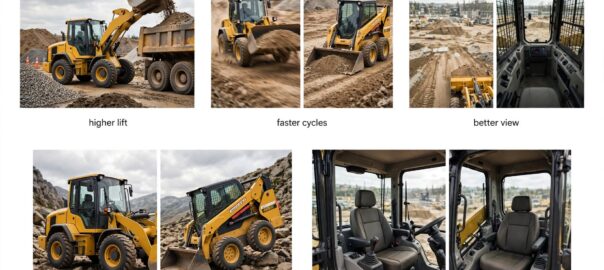
A concrete contractor rented a compact wheel loader for two weeks. He loaded mud from his mixer into forms. He moved faster than with his old skid steer. He bought a compact wheel loader the following month. The rental cost him $1,000. Buying the wrong full-size machine would have cost him $50,000 and a financing headache. The rental made the right decision obvious before he spent a dollar on ownership.
Rental strategy: Pay $1,500 for one week of rental on any compact construction machine before you buy. Put it on your actual jobs. If it fits your work, buy it. If it does not, you avoided a $40,000 mistake for the cost of a week’s rental.
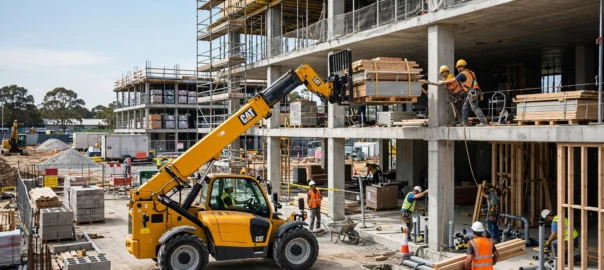
Cities are building denser housing. Townhouses replace single-family homes. Apartment buildings replace parking lots. These infill sites have no room for full-size equipment. Developers need machines that work in 5-foot-wide alleys, turn in their own length, and carry material through narrow hallways without tearing up finished floors.
An urban developer in Seattle standardized on compact construction machines for all infill projects. His crews finish basements faster, break less concrete by hand, and load debris directly into trucks parked on the street. His project timelines dropped by 20 percent after switching from full-size to compact equipment across his entire fleet.
A mini excavator digs foundations in a 10-foot-wide alley. A compact track loader hauls material through a 5-foot passage. A stand-on skid steer works inside a ground-floor retail space. Full-size equipment cannot do any of these jobs on these sites — period.
Full-size machines are loud. Hydraulic pumps whine. Engines roar. Tracks clatter on concrete. Compact construction machines produce fewer decibels from smaller engines. Quieter operation means early morning work is possible. It means residential neighborhoods stay peaceful. It means neighbors do not call the city.
A contractor working a residential site received zero noise complaints using compact equipment. His previous job with full-size equipment generated 6 complaints and a $500 city fine. The noise difference did not just save his relationship with the neighborhood — it saved him money directly.
The trailer savings are equally real. A full-size machine needs a gooseneck trailer and a heavy-duty pickup — total towing setup cost of $78,000. Compact construction machines need a 7,000-pound utility trailer and a half-ton pickup — total setup cost of $48,000. You save $30,000 on your truck and trailer before you buy the first machine.
| Category | Full-Size Equipment | Compact Construction Machines |
|---|---|---|
| Skid Steer Purchase Price | $60,000 – $90,000 | $25,000 – $40,000 |
| Excavator Purchase Price | $80,000 – $150,000 | $25,000 – $70,000 |
| Daily Rental Rate | $500 – $800 / day | $250 – $350 / day |
| Towing Setup Cost | $78,000 | $48,000 |
| CDL Required | Often yes | No |
| Gate Access (36–48 in) | No | Yes |
| Operator Training Time | 6 weeks | 3 weeks |
| Total Savings Potential | — | $30,000–$100,000+ |
- Work residential or urban job sites
- Need gate and alley access regularly
- Want lower entry cost and monthly payments
- Train new operators frequently
- Work exclusively on large open sites
- Move loads over 2,000 lbs consistently
- Have permanent heavy equipment infrastructure
- Need maximum reach and digging depth
Compact construction machines work where full-size equipment cannot fit, cost less to buy, less to tow, less to insure, and less to fuel. They turned hand-dig jobs into machine jobs, 3-day jobs into 6-hour jobs, and solo operators into profitable businesses. The shift is not slowing down.
Compact construction machines open job sites that full-size equipment locks you out of — at half the purchase price. Compare wheeled vs tracked options to find the right fit, or browse the full lineup at Machinery.blog.
Shop Machinery.blog →