Compact Excavator Under 1 Ton: Worth It or Just a Toy?
A compact excavator under one ton is not what most people picture when they think of excavation equipment. But for the right jobs, it pays for itself faster than almost any machine in this price range. Here is everything you need to know before you buy or rent one.
A compact excavator under one ton weighs between 800 and 2,000 pounds. Popular models include the Kubota U10-5, Yanmar ViO10, and Bobcat 304. These machines fit through a standard garden gate. You can tow one with a small trailer. You do not need a special license. You do not need a heavy truck.
One person can load and unload the machine alone. That alone separates this class from everything above it.
These machines produce 800 to 1,500 pounds of breakout force. That is not a lot. A 3-ton excavator gives you three times that power. At this size, you will take smaller bites. You will dig more slowly. You will not trench through solid clay and rock all day.
But you do not need that power for every job. This machine earns its money on access and precision — not brute force.
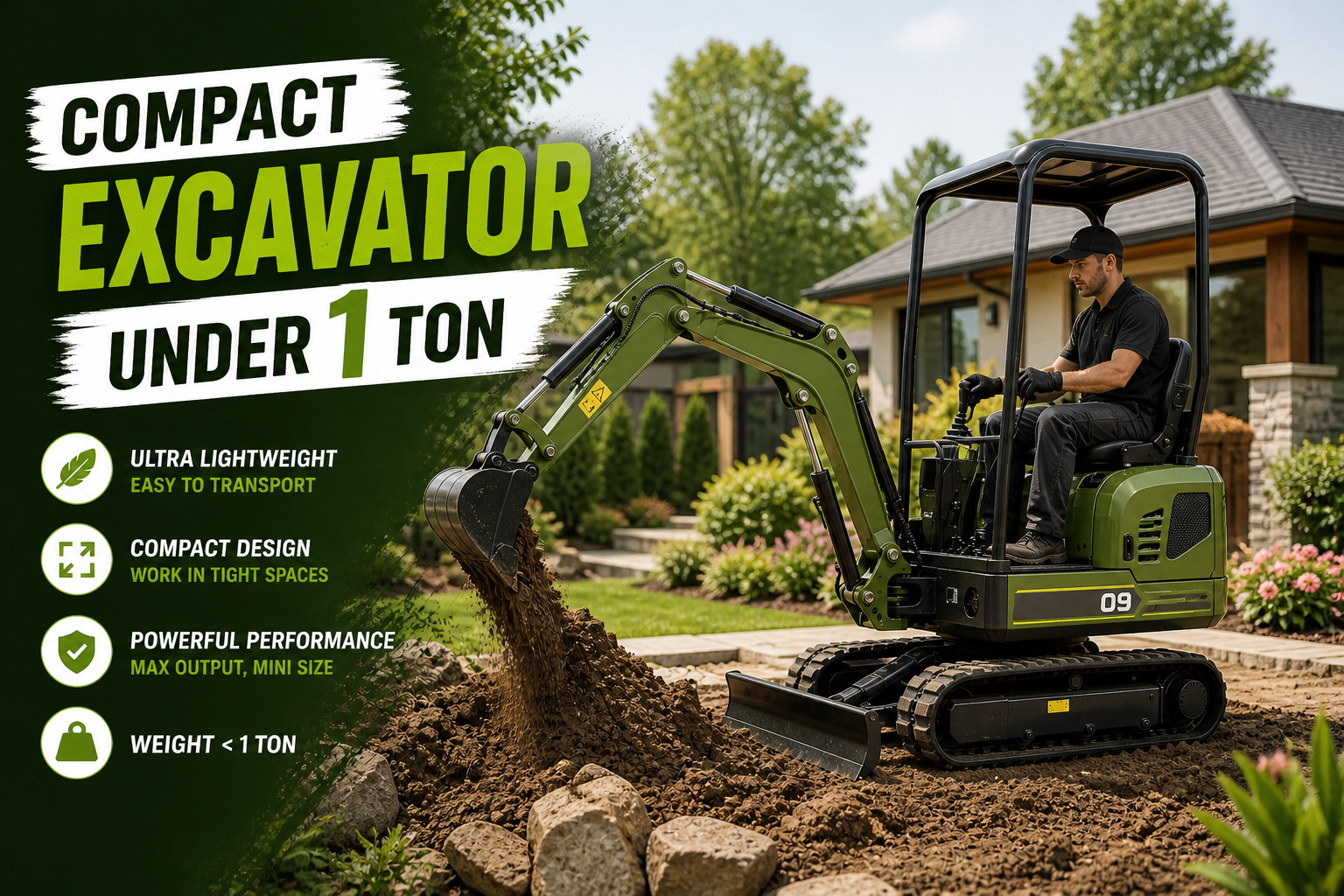
This machine class excels in tight spaces. These are the specific jobs where it earns its keep:
-
Fence post holes. Rocky ground destroys handheld augers. It digs each hole in minutes. You sit in a seat. You use hydraulic power. Your back stays healthy.
-
Irrigation and drainage trenches. You need narrow trenches for pipes. A 6-inch or 8-inch bucket works perfectly. The machine fits between trees and shrubs. You finish without tearing up the yard.
-
Backyard landscaping. Most side gates are 36 inches wide. This machine passes through easily. A larger machine does not fit. You either hand-dig or rent the small one.
-
Indoor demolition. Remove a small concrete slab inside a basement or garage. It fits through a standard door. It does not damage the frame. You break and load material without a sledgehammer.
-
Tree planting on residential lots. Dig each hole in two minutes. Move to the next hole. The machine does not compress the soil around your planting area.
-
Power line and utility work in alleys. Alleys are narrow. Access is tight. It turns in its own length. You work without blocking traffic.
Fence contractor: Bought a 900-pound machine for $18,000 used. Dug 5,000 fence post holes in year one at $15 per hole — $75,000 revenue. The compact excavator paid for itself in four months.
Midwest landscaper: Uses his machine for drainage jobs. Charges $450 per day plus labor. Books 80 machine days per year — $36,000 in machine revenue alone. Operating costs: fuel, grease, and one set of tracks every two years.
Do not buy one for these jobs:
- Full basements. You need reach and power. Small machine takes weeks. A real excavator takes two days.
- Large stumps in heavy clay. Machine rocks and bounces. A 3-ton pops it in ten minutes.
- Commercial site work. You work too slow. Your crew waits on you.
- Frozen ground or limestone trenching. Machine overheats. Bucket teeth wear fast.
- Fenced backyards. Fits through a 36-inch gate. No other machine does.
- Residential trenches. Narrow bucket. Minimal disturbance.
- Indoor work. Fits through a standard door frame.
- Utility alleys. Turns in its own length. Works without blocking traffic.
These machines cost $25,000 to $35,000 new. Used machines with 1,000 to 1,500 hours cost $15,000 to $22,000. Rental rates run $200 to $300 per day or $800 to $1,000 per week.
| Option | Year 1 | Year 2 | Year 3 Total |
|---|---|---|---|
| Rent (20 days/yr @ $250) | $5,000 | $5,000 | $15,000 |
| Buy used compact excavator | $18,000 | $0 | $18,000 — own it |
If you rent one for 20 days per year at $250 per day, you spend $5,000 yearly. After three years you have spent $15,000 and own nothing. Buying a used machine for $18,000 puts you ahead after year three — and you still own the machine.
Ask yourself one question. Will 70 percent of your work be small access jobs? Backyards. Fenced areas. Indoors. Alleys. Residential trenches. If yes, buy the compact excavator. It will earn you money.
Will most of your work be open-site excavation? Foundations. Large stumps. Long trenches. New construction. If yes, save your money. Buy a 2.5 to 3.5 ton machine. You will be frustrated with a compact excavator on those jobs.
The rule is simple: Match the machine to the work. Do not buy a tool hoping the work will come. Look at your last 100 jobs. Count how many days access was the problem. That number tells you everything about whether a compact excavator is right for you.
Rent a sub-1-ton compact excavator for one full week. Put it on your actual jobs. Dig with it. Load with it. Move it around your trailer. See how it feels on day four — not day one.
Day one is always fun. Day four tells you the truth about whether it fits your workflow or fights it.
Read our mini excavator vs skid steer comparison if you are still deciding between machine types before you commit to renting.
Rubber tracks wear out. A set for a sub-1-ton machine costs $800 to $1,200. Hard surfaces like concrete and asphalt eat tracks fast. Rocky ground tears lugs off. You will replace tracks every 800 to 1,200 hours with careful use. Faster if you abuse them.
Keep spare tracks on your shelf. A broken track on Monday morning stops your whole week. Factor this into your ownership budget from day one.
A sub-1-ton compact excavator is not a toy. It is a specialized tool for a specific set of jobs. Use it for those jobs and it pays for itself quickly. Use it for the wrong jobs and you will be frustrated and broke.
Hand-digging five fence post holes in rocky ground takes two hours. The same job with a compact excavator takes 20 minutes. That difference adds up over a season into real money.
Bottom line: Buy the compact excavator if your work fits the machine. Rent it if you are unsure. Ignore people who call it a toy — they do not do your work in your spaces.
Looking for this type of machine or want to compare models side by side? Browse the full equipment lineup on Machinery.blog and find the right machine for your jobs and budget.
Shop Machinery.blog →
One thought on “Compact Excavator Under 1 Ton – Seriously Worth It or Toy?”