Mini Excavator vs Skid Steer: Which One Do You Actually Need?
Guys show up to a job site with the wrong machine and wonder why everything is taking twice as long. It happens more than you think. This decision looks simple until you are standing on site with the wrong one. Here is how to get it right before you load the trailer.
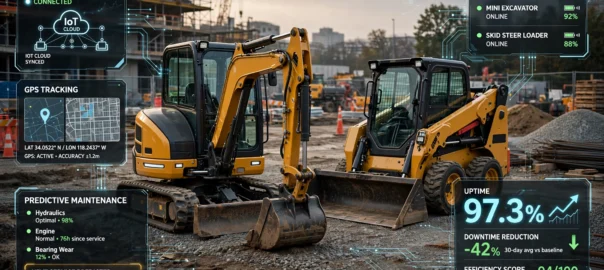
A mini excavator sits on tracks. It has a rotating body and a digging arm. You use it to dig. Sizes range from 1 ton to 10 tons, but most small contractors work in the 1.5 to 6 ton range. It is a purpose-built digging machine.
A skid steer is built to move things — dirt, gravel, debris, snow. It has lift arms up front and accepts a wide range of swap-out attachments. Bobcat, Cat, Case, John Deere. You have seen these on every job site.
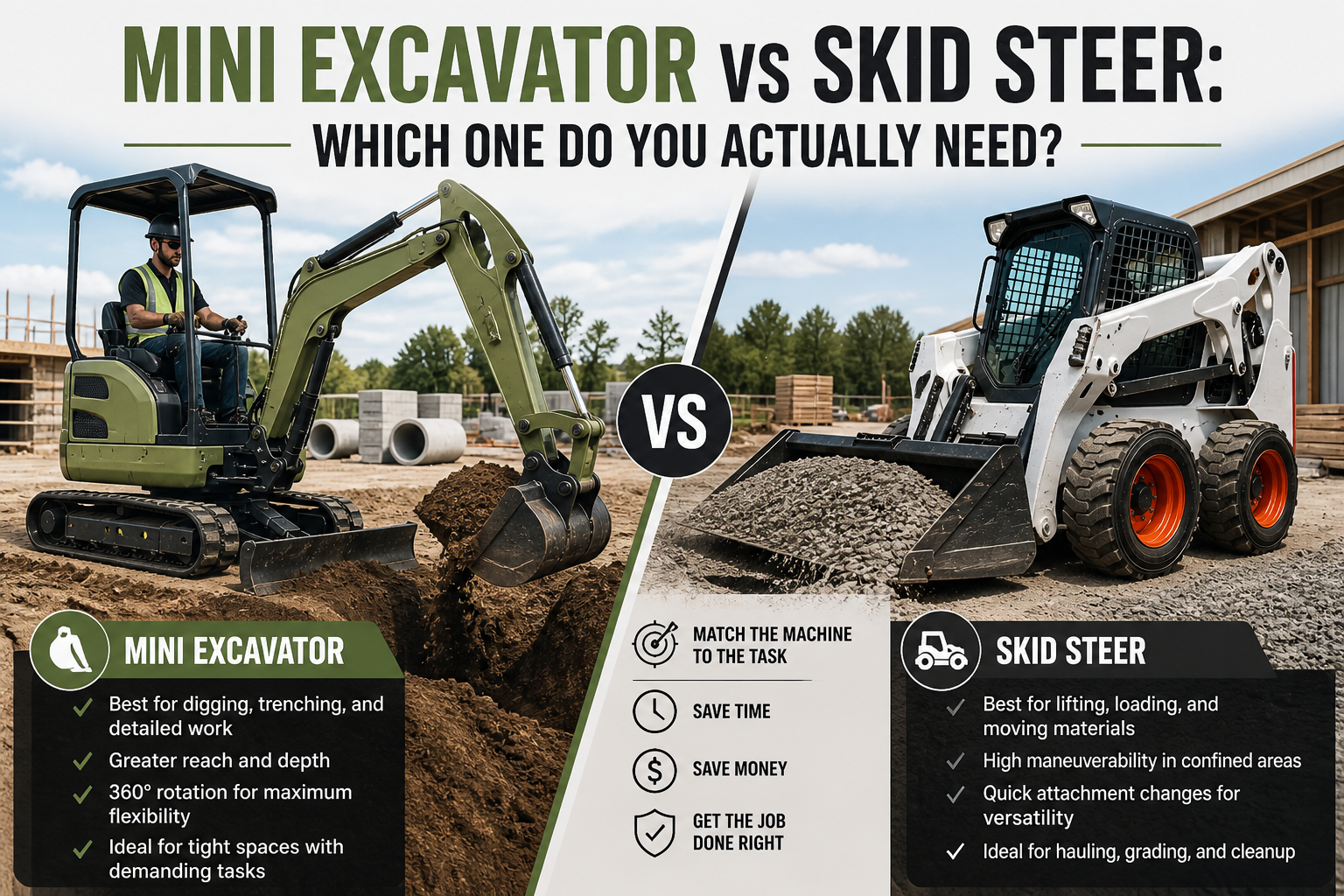
If you need to go deep, the skid steer is not your answer. It digs 8 to 14 feet, depending on the model. A skid steer with a trencher attachment barely scratches the surface by comparison.
Laying pipe, digging footings, pulling stumps near a fence line — these jobs need a mini excavator. There is no attachment or workaround that changes this. Depth is where this machine has no competition.
200 yards of topsoil to spread across a flat lot? The skid steer eats that job for breakfast. Bigger bucket, faster travel speed — up to 7 mph on some models. You finish in hours, not days.
The mini excavator is not built for this kind of work. It is slow moving material across open ground. When volume and speed matter more than depth, the skid steer is the right machine on site.
A zero tail swing mini excavator fits right up against a wall or fence. The rear end does not swing out when it rotates. On a small backyard job with fencing on three sides, it actually works better than anything else on the market.
Skid steers need room to move their arms and turn around. Give them space and they perform. Box them in and you have a problem. In fenced residential yards, it is the only machine that makes sense.
Tracks win on soft or uneven ground. It sits stable on a slope where a wheeled skid steer would struggle. Rubber tracks also go easy on existing turf. A skid steer spinning its wheels on a wet lawn tears everything up.
If you care about the landscaping you are working around, bring it. The tracks spread the weight and leave far less damage behind on soft or finished ground.
Key point: A tracked skid steer (compact track loader) improves soft-ground performance significantly. But for slopes and precision work next to finished areas, it still has the edge.
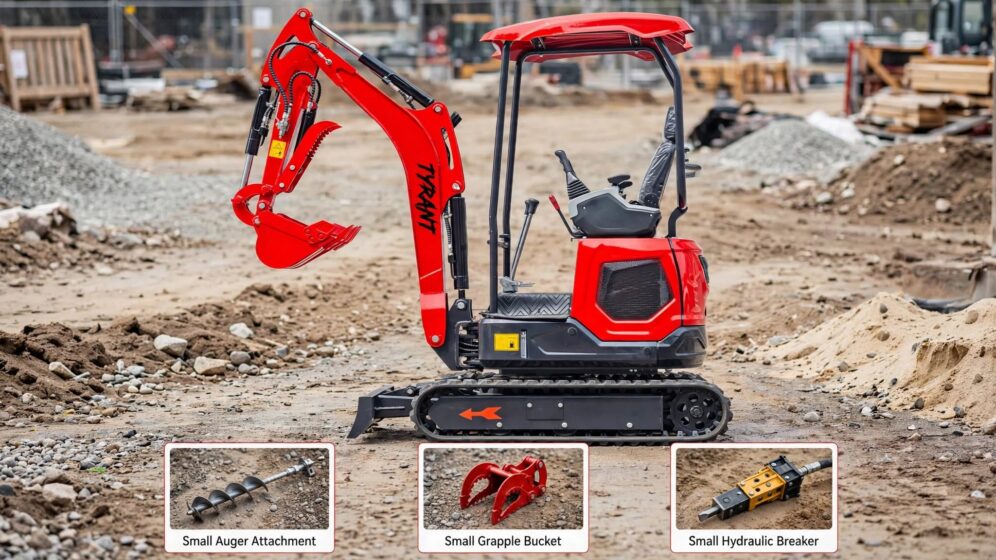
Skid steers run a wider range of attachments — buckets, grapples, augers, hydraulic breakers, pallet forks, angle brooms, and mulchers. One machine, many jobs. Changeovers take minutes.
These machines have attachments too — hydraulic thumb, auger, breaker, tilt bucket. But the variety is smaller and the swaps take a bit longer. If you need one machine to do five different things across one week, the skid steer makes more sense than the excavator for that kind of work.
The mini excavator vs skid steer decision becomes simple when you look at actual jobs. Here is how experienced contractors split the choice:
- Excavator Plumber trenching a sewer line in a fenced backyard. Zero tail swing excavator. Nothing else fits or works as well.
- Skid Steer Landscaper spreading topsoil on a new build lot. Skid steer with a bucket. Finished fast.
- Skid Steer Contractor clearing demolition debris and loading trucks. Speed matters. Skid steer wins.
- Excavator Utility crew digging 10 feet for a water main on a slope. Mini excavator. No debate.
- Excavator Tree removal in a tight backyard next to a fence. Mini excavator with hydraulic thumb. Gets in, does the work, leaves the fence standing.
- Skid Steer Snow removal on a commercial paved lot. Skid steer with bucket or snow blower attachment. Covers ground fast.
Renting either machine runs about $300 to $600 per day, depending on your area and size. Buying used starts around $25,000. New machines go up to $90,000 or more.
| Option | Mini Excavator | Skid Steer |
|---|---|---|
| Rental / Day | $300–$600 | $300–$600 |
| Rental / Week | $1,200–$2,000 | $1,200–$2,000 |
| Buy — Used | from $25,000 | from $25,000 |
| Buy — New | up to $90,000+ | up to $90,000+ |
| Combined Rental / Week | $2,000–$4,000 — both on site | |
Many contractors rent both for bigger jobs — the excavator digs, the skid steer moves. They work well together. The combined weekly rental of $2,000 to $4,000 often costs less than owning one machine that does neither job perfectly.
Worth knowing: A compact track loader sits between a wheeled skid steer and a mini excavator. It handles soft ground better than a wheeled skid steer but moves material faster than a mini excavator. It does not dig deep though — keep that in mind before choosing it as a compromise. See the Typhon Terror XXV mini excavator if you need proven digging power with a Kubota engine and AC cabin.
- Dig deep regularly — 8 feet or more
- Work in fenced backyards or tight access
- Work on slopes or soft ground
- Need to protect existing turf or landscaping
- Do utility, plumbing, or footing work
- Move large volumes of material on flat ground
- Need one machine to run many attachments
- Work on hard, open surfaces regularly
- Do site cleanup, demo loading, or snow removal
- Need speed between tasks and piles
Look at the job in front of you. The site tells you which machine you need. If you dig deep, work on slopes, and protect existing ground — get the excavator. If you move volume fast and need attachment flexibility — get the skid steer.
Ready to find the right mini excavator for your jobs? Browse the full lineup including the Typhon Terror XXV — 2.7 ton, Kubota D1105, AC cabin, retractable tracks.
Shop Machinery.blog →
3 thought on “Mini Excavator vs Skid Steer: Which One Do You Actually Need?”