A jobsite needs material moved. Pallets need loading. Aggregate needs transport. Trucks need filling. The equipment choice determines exactly how fast the work gets done. Compact wheel loaders and skid steers both handle these tasks, but one machine consistently does it better.
A compact wheel loader beats skid steer setups for much faster material handling. To prove exactly why a compact wheel loader beats skid steer efficiency, we must look at the hard data.
Here are five proven material handling wins where a compact wheel loader beats skid steer performance in speed, capacity, visibility, tire wear, and fuel savings.
A compact wheel loader is built for repeated loading and carrying across defined routes. Its articulated steering creates a smooth turning arc, not the tire-scrubbing pivot of a skid steer. This design makes the machine far more efficient when material needs to move from one point to another.
Speed matters when material needs to move. When measuring travel, a compact wheel loader beats skid steer top speeds easily. A skid steer travels at 7 to 11 miles per hour on good ground, while a compact wheel loader reaches 15 to 25 miles per hour depending on the model.
This speed difference compounds over a day. A machine making 100 trips across a jobsite spends less time traveling and more time loading. Because a compact wheel loader beats skid steer cycle times, you finish faster and move much more material.
A farm or construction site with spread-out work areas benefits most. The time saved proves a compact wheel loader beats skid steer productivity over any distance. A skid steer traveling 100 feet at 8 mph takes about 8.5 seconds. A compact wheel loader takes about 3.8 seconds. On a job with 500 trips per day, that saves nearly 40 minutes of pure travel time.
A skid steer lifts 1,000 to 2,000 pounds depending on the model. When handling heavy pallets, a compact wheel loader beats skid steer capacity easily, lifting 1,800 to 4,000 pounds with higher dump heights. Fewer trips lead to less fuel burned and less wear on the machine.
The wheel loader’s stability contributes directly to this capacity. The articulation joint allows all four wheels to stay on the ground. On uneven terrain, a compact wheel loader beats skid steer stability, whereas a skid steer can lift a full bucket and become wildly unstable when turning.
Consider a job moving 100 tons of gravel. A skid steer with a 1,500-pound bucket needs 134 bucket loads. A compact wheel loader with a 3,000-pound bucket needs exactly 67 bucket loads. Half the cycles, half the travel time, and half the operator fatigue. Ultimately, a compact wheel loader beats skid steer payloads on every single metric.
A skid steer operator sits low and forward. The lift arms block side visibility, and the operator cannot see the bucket edges clearly. Working around pedestrians becomes more challenging and less safe.
In terms of line of sight, a compact wheel loader beats skid steer visibility significantly. The operator sits higher, looks down at the bucket from a better angle, and the edges are entirely visible. This improves accuracy when loading trucks.
For operator comfort, a compact wheel loader beats skid steer ride quality. Skid steers bounce more on rough terrain. Compact wheel loaders have a longer wheelbase and better suspension, so the ride is smoother and fatigue decreases.
Reduced Fatigue: A full workday on a skid steer can be physically demanding. By mid-afternoon, a compact wheel loader beats skid steer ergonomics, keeping operators alert, accurate, and safe throughout the entire day without constant vibration.
Skid steer turning scrubs tires heavily across the surface. A full turn drags the tires sideways, wearing down tread quickly. On paved surfaces, tires leave black marks; on soft ground, they tear up the surface.
On paved surfaces, a compact wheel loader beats skid steer handling by eliminating marks. The front and rear axles steer independently, rolling in the direction of travel without any sideways scrub. For turf protection, a compact wheel loader beats skid steer maneuvering effortlessly.
Financially, a compact wheel loader beats skid steer tire life by thousands of hours. A set of skid steer tires costs $800 to $2,000 and may need replacing every 500 to 1,000 hours. A compact wheel loader operating on similar surfaces may get 2,000 to 3,000 hours from a set, saving enough to cover the machine’s cost difference.
Moving material costs fuel. A skid steer uses aggressive power for both travel and turning. When analyzing fuel burn, a compact wheel loader beats skid steer economy because it uses far less energy per ton of material moved.
Because it rolls freely, a compact wheel loader beats skid steer energy consumption. The articulated steering heavily reduces rolling resistance so the engine works less hard to move the exact same load.
Over a full year, a compact wheel loader beats skid steer operating costs heavily. Moving 100 tons of material 200 feet might burn 5 gallons in a skid steer, but only 3 gallons in a wheel loader. That is a 40% fuel saving per job, accumulating to roughly $1,600 saved annually.
Skid steers remain the better choice for specific applications, like tight indoor demolition or tasks requiring constant attachment swaps on the universal plate.
While skid steers turn incredibly tight, a compact wheel loader beats skid steer models over longer distances. The machine shines on farms, large construction sites, and landscaping projects where material must travel 100 feet or more, filling trucks much faster.
Operators who make the switch notice the difference immediately. Experienced operators know a compact wheel loader beats skid steer predictability. The steering is smooth, the machine tracks straight, and the operator focuses on the load rather than managing erratic bouncing.
If you measure speed and capacity, a compact wheel loader beats skid steer operations on any job involving carrying material from one point to another.
The compact wheel loader costs 20% to 40% more upfront. But lower tire replacement costs, lower fuel consumption, and higher productivity offset this completely. In the long run, a compact wheel loader beats skid steer ROI within 18 to 24 months, and the machine retains a much higher resale value.
The choice between a compact wheel loader and a skid steer heavily depends on the work. Both machines undoubtedly have their place in a contractor’s fleet.
However, for pure material handling, a compact wheel loader beats skid steer in almost every category.
- Faster travel speeds across open job sites
- Higher load capacity and dump heights
- Better visibility and long-shift operator comfort
- Less tire wear and lower fuel consumption
- Zero-turn agility for indoor demolition
- Lower initial purchase price upfront
- Wide variety of universal attachments
These five wins make it clear why a compact wheel loader beats skid steer alternatives for moving material efficiently and incredibly cost-effectively.
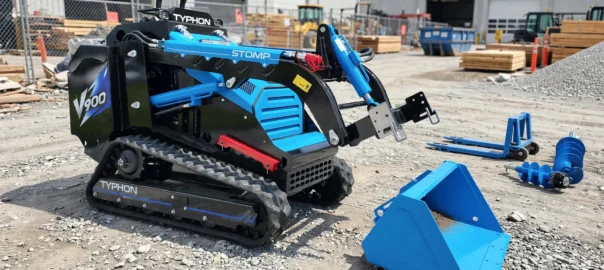
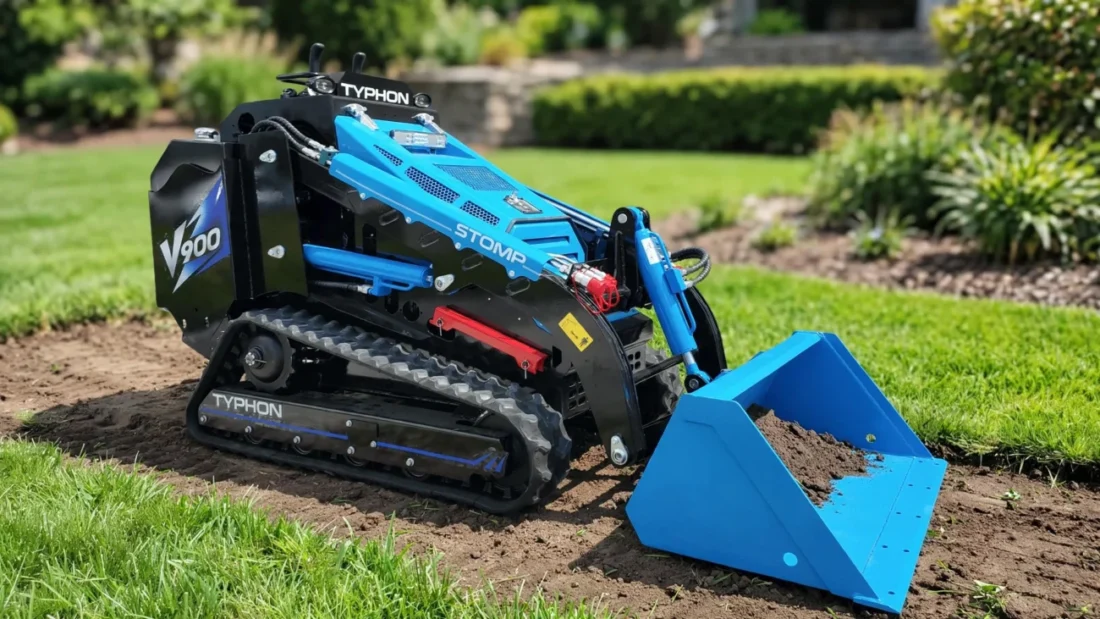
Need a machine that blends skid steer agility with modern reliability? Explore the Brand New TYPHON STOMP Mini Skid Steer powered by a rugged EPA Gas engine for your toughest tight-access jobs.
View Machine Specs →

One thought on “Compact Wheel Loader Beats Skid Steer: 5 Proven Material Handling Wins”