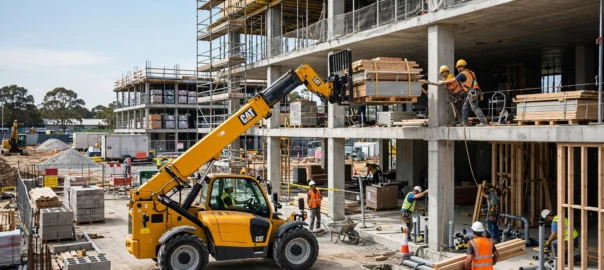
A telehandler sits on the job site. The boom extends. The load lifts. The machine works hard every day. But the boom takes the most punishment. It extends and retracts hundreds of times, carries heavy loads, and operates in constant dust, dirt, and debris.
Despite this, telehandler boom maintenance often gets overlooked. Operators check the engine, the tires, and the hydraulics, but they forget the boom itself. This is a massive mistake. The boom is the heart of the machine. Neglect it, and the machine fails. Maintain it, and the machine lasts for years.
Here are three simple telehandler boom maintenance rules that double your lift life and keep your machine out of the repair shop.
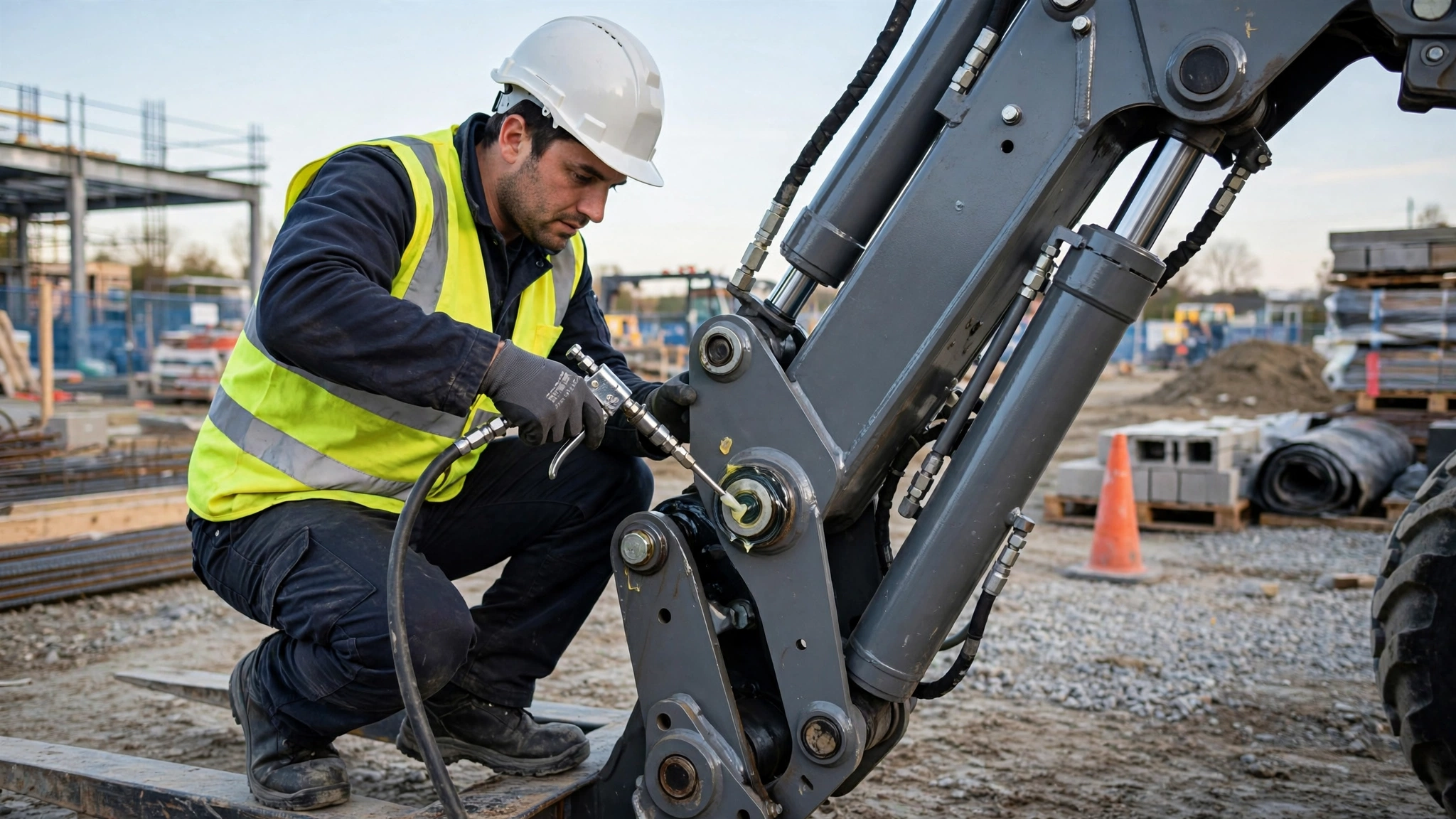
The boom has many moving parts. Pins rotate, cylinders extend, and sections slide. Each movement creates friction, which generates heat and wears down components. Proper telehandler boom maintenance requires greasing every 30 to 50 hours of operation. This creates a protective layer, prevents metal-on-metal contact, and extends the life of pins, bushings, and wear pads.
There are several grease points on the boom: front and rear pivot points, cylinder attachment points, and wear pad contact areas. Each point prevents premature wear. Without adequate grease, the boom becomes sticky, noisy, and inefficient.
Real Cost: A contractor in the Midwest learned this lesson about telehandler boom maintenance the hard way. He operated his machine for two years without greasing the pivot points. The pins wore down, bushings cracked, and the repair cost $4,000. A simple $20 tube of grease would have prevented it.
Always use the correct grease—typically a multi-purpose lithium-based grease—and clean every fitting before pumping. Old grease loses its protective properties. Regular greasing flushes out the old and replaces it with fresh protection.
Wear pads are the unsung heroes of telehandler boom maintenance. They sit between the boom sections, allow smooth extension, and prevent metal-to-metal contact. But they wear down over time due to sliding friction and dust.
When the pads wear out, boom sections rub against each other, causing expensive damage. Inspect the wear pads regularly and check the clearance between sections. If clearance exceeds manufacturer specs, replace the pads.
When discussing telehandler boom maintenance, chain tension also matters. Loose chains cause chatter and jerking; tight chains stress components. The chain slack should not exceed one inch. If the adjuster is maxed out, the chains need replacement.
One operator ignored his telehandler boom maintenance schedule for chain tension. The chains broke during retraction, jamming the boom sections. The repair took three days and cost $8,000. Remember to use chain oil, not grease, on chains because grease attracts grinding dust.
The best telehandler boom maintenance is prevention. Daily visual inspections catch problems before they become catastrophic failures. The operator should inspect the boom before starting work every single day.
Park on level ground, turn off the engine, and walk around. Check for cracks, dents, split welds, worn pivot pins, and leaking hydraulic cylinders. Also, inspect the quick-coupler and fork blades for wear.
Document Everything: One contractor made daily telehandler boom maintenance inspections mandatory. During a routine check, an operator found a cracked weld. The machine was taken out of service and repaired immediately, preventing a fatal breakdown.
These three rules work powerfully together. Greasing reduces friction, inspecting wear pads prevents metal contact, and daily checks catch problems early. Combined, strict telehandler boom maintenance extends the life of every boom component.
Pins last longer, bushings stay tight, and chains run smoothly. A well-maintained boom handles full loads consistently and performs reliably in dust and rain. Conversely, a neglected boom fails at 5,000 hours, while proper care ensures it lasts 10,000 hours. Maintenance literally doubles the lift life.
Keep a grease gun on the machine at all times. Do not wait for a scheduled lube service; if a pivot point looks dry, grease it. Use a rag to clean fittings first so dirt does not act like sandpaper inside the bearing.
Train every operator on telehandler boom maintenance. They need to know what to look for, how to grease properly, and when to report issues. Wash the boom regularly, as mud holds moisture, causing corrosion and making inspections difficult.
A new telehandler boom costs $15,000 to $30,000. Replacing it is devastatingly expensive. Maintaining it is incredibly cheap.
For roughly $160 per year (grease and wear pads), the boom stays in perfect condition and doubles its expected life. Ignoring your telehandler boom maintenance costs thousands. A failed pin costs $1,500, a cracked bushing costs $2,000, and a broken chain costs $4,000. The math is simple.
One common mistake is using the wrong grease, like heavy axle grease, which attracts dust and forms an abrasive paste. Another mistake is over-tightening chains, which stresses and cracks the sprockets.
Some operators ignore telehandler boom maintenance because the machine “seems fine.” Waiting for a problem is reactive and expensive. Preventive maintenance is proactive and saves your budget.
A telehandler boom works hard. It lifts heavy loads and extends into tight spaces. The boom deserves dedicated care. Ultimately, telehandler boom maintenance is not complicated. It is simple, consistent, and highly effective.
- Grease pivot points every 30-50 hours
- Clean grease fittings before pumping
- Inspect wear pads and chain slack
- Perform a daily walk-around inspection
- Using heavy, dust-attracting axle grease
- Applying grease to chains instead of oil
- Ignoring clicking chains or grinding sounds
- Assuming the boom is fine without checking
Follow these three telehandler boom maintenance rules and the boom will last. Start today. Pick up the grease gun, check the boom, and keep your telehandler working profitably for years to come.
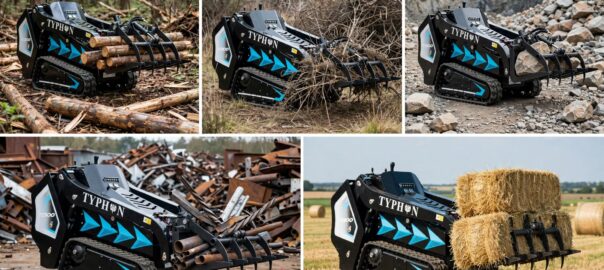
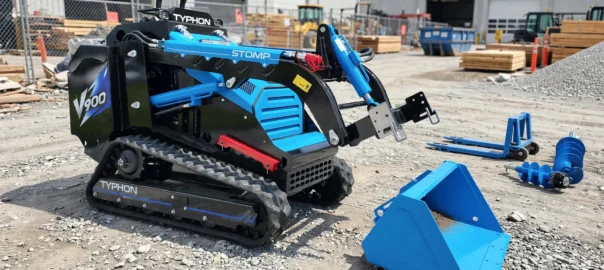
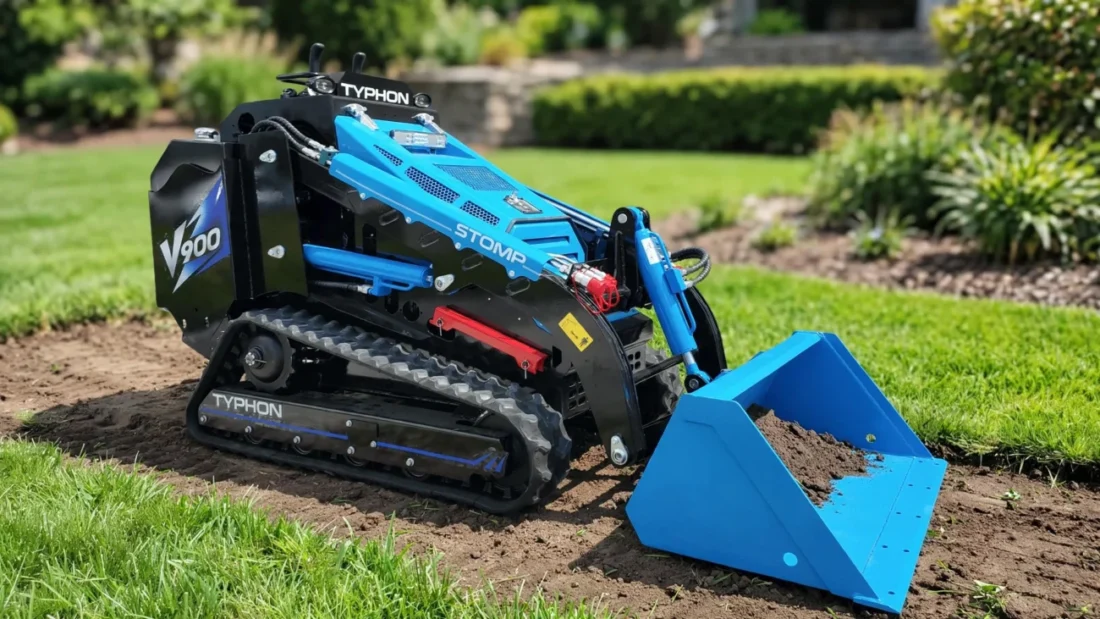
Need a versatile machine that handles tough environments with ease? Check out the Brand New TYPHON STOMP Mini Skid Steer powered by a Kubota D1105 Diesel EPA Engine.
View Machine Specs →