You operate a crane. You lift heavy loads. You work at height. You work near people. One mistake can kill.
Crane safety rules are not optional. They are essential. Every operator must follow specific guidelines. These crane safety rules prevent accidents. These crane safety rules save lives.
Here are seven critical crane safety rules every operator must strictly follow.
You arrive at the job site. You climb into the cab. You start the engine. You start lifting. You are wrong.
Every lift must begin with an inspection. This is not optional; this is critical. The inspection identifies problems before they cause accidents. Check the crane structure for cracks, bent components, missing pins, and loose bolts. Check the hoist mechanism, testing brakes, limit switches, emergency stops, and the load moment indicator.
Check the wire rope for broken wires, kinks, corrosion, or bird caging. The wire rope is your lifeline. Check the hook for cracks, deformation, and damaged latches. Ensure outriggers extend fully, sit on firm ground, and that the crane is completely level.
Real Consequence: A crane operator in New York skipped his inspection. He lifted a steel beam, and a faulty brake failed. The beam dropped, two workers were injured, and the operator lost his job and faced heavy fines.
The inspection takes 15 minutes. It saves lives, careers, and money. Keep a written record of each inspection, noting dates, findings, and repairs. This record proves you followed the crane safety rules.
Your crane has a load chart. It shows what you can lift, how far you can reach, and the safe operating range. You must know your chart.
Following crane safety rules regarding load charts is the law. It is not a suggestion; it is a legally binding, manufacturer-certified document. You must follow it. The chart shows capacity at each outreach—shorter outreach means more capacity, longer outreach means less capacity. It also shows capacity with outriggers extended, retracted, or on tires.
Check it every lift as part of your crane safety rules. Do not guess. Do not estimate. Use the actual numbers.
An operator in Texas lifted a 10-tonne load. He thought the crane could handle it and ignored his chart. At 20 metres, the chart showed a capacity of only 8 tonnes. The crane tipped, the load fell, and the site was damaged. The operator faced criminal charges, was found negligent, lost his license, and was fined $50,000.
You set up the crane. You extend the outriggers. You think the ground is firm, but you do not check. You are wrong.
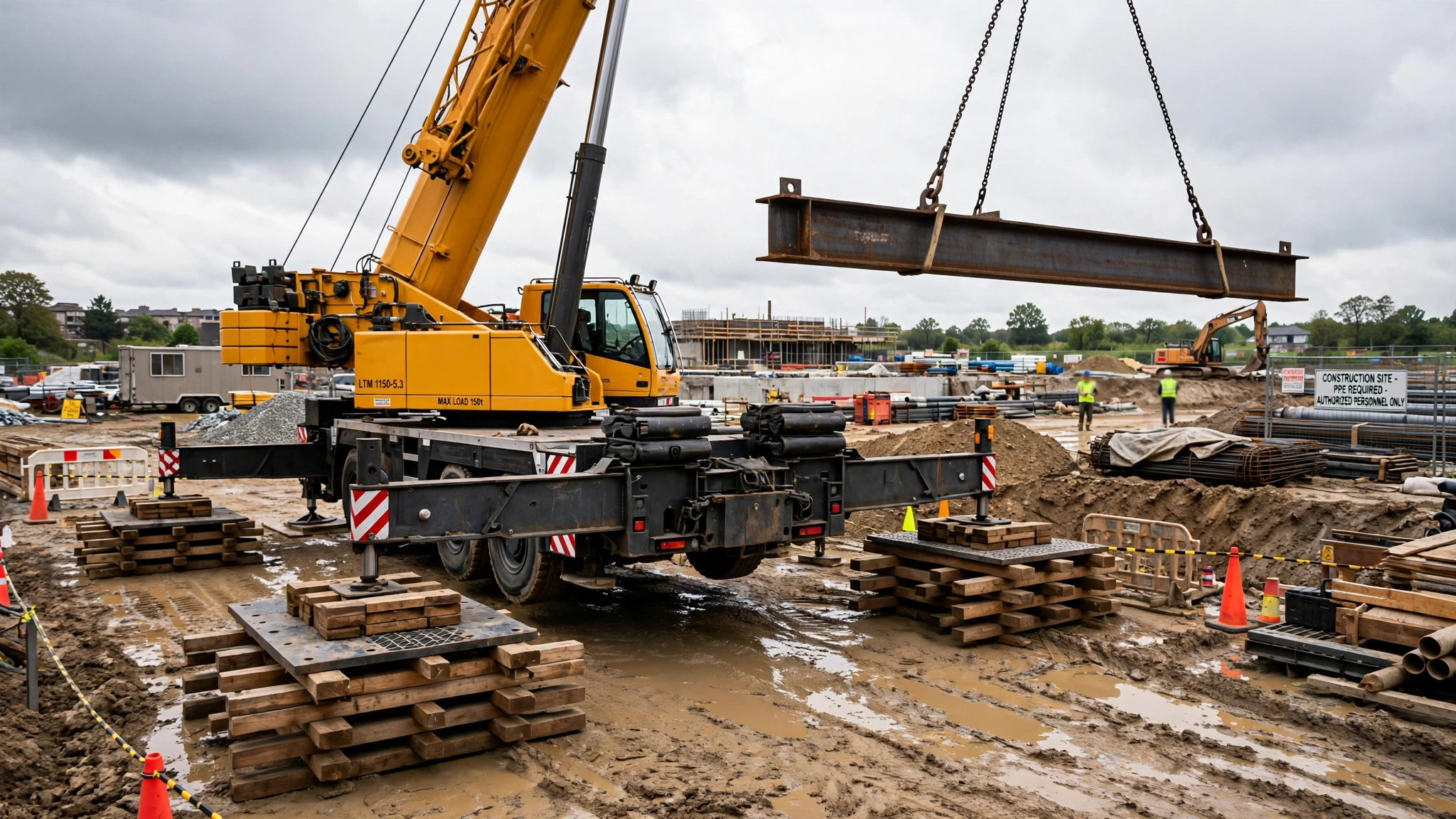
Ground conditions are a major part of crane safety rules. The crane must sit on incredibly stable ground. Soft ground causes settlement, settlement causes instability, and instability causes tipping. Check the ground under each outrigger for soft spots, voids, slopes, or underground utilities.
Use cribbing under the outriggers to spread the load, prevent settlement, and increase stability. Use cribbing to align with standard crane safety rules on any soft ground. Test the ground with a load test. Extend outriggers, lift a test load, and watch for leaning. If the crane settles, stop the lift immediately.
Costly Mistake: An operator in Florida set up on wet ground without cribbing. The outrigger sank, the crane tipped, and the load crushed a building causing $1 million in damage. The operator was fired, and the company was sued.
You are told the load weight. You trust the number. You do not verify. You are wrong.
Load weight must always be verified. Do not trust verbal estimates. Check the shipping documents, weigh the load if possible, or calculate the weight based on exact material dimensions.
The weight determines the capacity needed, the outreach required, and the rigging necessary. Underestimating the weight violates fundamental crane safety rules and causes structural failure.
A contractor in California lifted a concrete panel labeled as 4 tonnes. The actual weight was 6 tonnes. The crane capacity was 5 tonnes. The boom failed, and the panel crashed. The operator was injured, and the case settled for $500,000. Verify every single load weight to comply with your crane safety rules.
You attach the rigging. You assume it is good. You do not inspect it. You are wrong.
Rigging must be inspected before every single lift according to crane safety rules. Slings, shackles, and hooks must be in perfect condition. Inspect synthetic slings for cuts, abrasions, heat damage, or broken fibers. Inspect wire rope slings for broken wires, kinks, and corrosion. Check shackles for cracks, bent pins, and stripped threads. Check hooks for deformation and worn throat openings.
An operator in Texas used a damaged sling that had a cut from a previous job. The sling failed, dropping a steel beam and killing a worker. The operator went to prison for 5 years for manslaughter. Inspect your rigging to uphold strict crane safety rules.
You operate the crane. You cannot see the load or the landing area. You depend entirely on signals. You absolutely need clear communication.
Clear communication is a cornerstone of crane safety rules. Hand signals must be standardized. Radio communication must be flawlessly clear, and everyone must understand the directions. Establish a designated signal person to direct all lifts, watch the load, and communicate with the operator.
An operator in New York could not see his load and relied on unclear hand signals. He misinterpreted them and lowered the load onto a worker, causing severe injury. Clear communication prevents accidents. Confirm every move.
You lift a load. People are nearby, but you continue. You are entirely wrong.
Never lift a load over people. This is a critical mandate among all crane safety rules. A dropped load kills instantly. There is zero room for a second chance.
Keep everyone clear of the lift area by establishing a strict exclusion zone covering the entire swing radius. Do not lift over occupied buildings, active walkways, or busy parking areas. Keep people completely clear to fulfill basic crane safety rules.
An operator in Chicago lifted a beam over a walkway. The rigging failed, the beam fell, and a worker was killed. The operator was charged with criminal negligence and faced jail time.
Follow these crane safety rules. They are not optional; they are your absolute responsibility to protect yourself and your crew.
- Pre-operation structure and hoist inspection
- Load chart verification (Outreach & Limits)
- Load weight verified (Never guessed)
- Ground conditions checked & cribbing used
- Rigging thoroughly inspected for damage
- Clear standard communication established
- Exclusion zone active (No lifting overhead)
- Safety meetings reviewed regularly
Train your team so every operator knows these crane safety rules. Review them regularly and learn from industry mistakes. Make safety your top priority because an unsafe lift is a complete disaster.
Need a compact, reliable machine built with safety and ease-of-use in mind? The Typhon Tyrant X 1-Ton Mini Excavator features a 13.5HP Briggs & Stratton engine, a hydraulic oil cooler, and a heavy-duty thumb clip for secure material handling.
View Tyrant X Specs →